Friday, April 14, 2023

Digital Privacy and Why it Should Matter to You

DIGITAL PRIVACY AND WHY IT SHOULD MATTER TO YOU
by Christopher D.


Digital Privacy
Digital privacy, also known as internet privacy, is the concept of passing information, data, messages, and files over the internet without leaking to undesired individuals.
-https://microanalytics.io/articles/digital-privacy/


Digital privacy is a concept that you may not have heard of or really given much thought to, but it affects you in many, mostly hidden ways. The following are some negative consequences of having your digital privacy violated.


1) Data mining your online activities can be used to send you targeted content


Have you ever noticed your recommended content on social media sites such as Youtube always point you at content similar to what you already watch? This is not a coincidence. Websites monitor what you consume, and use that data to predict what you will watch more of. This cultivates addiction, but more importantly, it isolates you from things you don't like. This is very problematic because it creates echo chambers that shield you from other points of view and hearing all sides of an issue, so that you may have a nuanced understanding of it.

It gets even worse. A social media site's only goal is clicks - to keep you using the site as long as possible, so they can make money by showing you ads and selling your browsing habits to other big tech companies. But what gets clicks? Crazy and outrageous content. This is why extremist, fear mongering, political hacks on social media are popular and have so much influence over the minds of internet users. Whether you like these content creators or hate them doesn't really matter. When you click on their content, the algorithm sends you further down the rabbit hole, and makes them more prominent in searches and recommendations.

This also begs a very dark and philosophical question. How much of your ideas and opinions are really yours? Did you REALLY come up with your stance on that issue, or did your favorite site's algorithm send you to enough con artists that you started to believe it? Did you examine both sides of the issue and see it from multiple angles, or were you led on the path that made you waste the most time on Youtube?


You can avoid being tracked and served targeted content by installing plugins that delete browser cookies, block recommended content sidebars, block trackers, and not logging in when you browse a social media site. 

Here are some examples of such plugins
https://addons.mozilla.org/en-US/firefox/addon/cookie-autodelete/ (also available for chrome)
https://addons.mozilla.org/en-US/firefox/addon/df-youtube/ (also for chrome)
https://addons.mozilla.org/en-US/firefox/addon/privacy-badger17/ (also on chrome)
https://addons.mozilla.org/en-US/firefox/addon/ublock-origin/ (also for chrome. Also blocks ads!)

Your browser itself can also track you. LibreWolf, Brave, Waterfox, or any de-googled chrome based browser, are good choices that respect your privacy. Brave is very user friendly.

No Root Firewall is an easy to install android app that blocks most apps from sending unnecessary, sensitive data to bad actors that try to spy on you. All you need to remember is to allow traffic that is needed for your other apps to work (click those connections to turn them green)
https://play.google.com/store/apps/details?id=app.greyshirts.firewall&hl=en_US&gl=US


2) The authorities can will try to ruin your life


Snowden beat you...

You might be thinking at this point, "Well, if I have nothing to hide, then there is nothing to worry about, so its okay that the police can see all my stuff". Okay, then send me your passwords. DM them to me right now. I dare you. You got nothing to hide ....right? I won't hold my breath waiting for that.

The government, having access to your data is in opposition to the 4th amendment (the protection against search and seizure). Through various loopholes, they get away with it. However, it undermines, and slowly destroys that fundamental right. You wouldn't let the cops live in your house, just to keep an eye on you. Why are you okay with them doing that on your computer and phone?

"But its good because they only do that to catch bad guys!". Think again. Who is a bad guy? Your phone gives away your physical location to phone companies and big tech companies that build location tracking spyware into your phone and apps you use. This can be used to hunt down lawbreakers that many people would argue don't deserve it, such as undocumented immigrants, protesters, such as in the George Floyd protests, or even the street artists we learned about like Banksy. He would be a fool nowadays to take his phone with him on a night of street art creation.


3) Without privacy, your job and daily life can get pretty tough


A popular thing for some workplaces to do now is require employees to install monitoring apps on their phones. This lets the company know the employee's location and movement speed, even when they are away from the facility. This is infamously done to Amazon drivers to keep them working as hard as possible. It got so bad, they started having to use the bathroom in a bottle to not get written up for wasting time on bathroom breaks. I sometimes have to see their discarded bottles on the side of the road, which isn't nice... Imagine if you were late to work and your boss could see from your phone where you have been. "Why were you at the drug store?", he asks impatiently, while you think of an excuse for needing that Tylenol, other than the truth that you are hungover.

And what about even getting a job in the first place? Employers want to get their hands on as much info on you as possible. Wouldn't want to lose the offer because the HR department was able to get its claws on your Google (use Brave search, not Google) searches from last year? Passed the drug test, but legally ordered marijuana a few months ago? Sorry, this is a drug free workplace.


WHY DIGITAL PRIVACY? HOW DOES THIS ISSUE AFFECT ME?


It feels kind of like that

 This issue affects me because it attacks and undermines my right to privacy, and rights are important to me. I know that it is wrong from a moral standpoint and that is why I am against it.

 A more tangible way that it affects me is that datamining-fueled content manipulation distorts the information I and the people I have to live with, see. This means it affects our thoughts and ideas. Because of datamining and its use in content delivery algorithms, I have to live in a world where many of my peers and associates’ thoughts have been programmed by the content they are algorithmically shown. If you have ever felt upset that someone you know was “brainwashed” by social media, or a popular content creator, then it has affected you too.

Another tangible way it affects me is for employment. User data is often a company secret, but they can always sell it, or decide to make it public. Its already hard enough to get a job, and I don’t need “what you Googled last year” to be something on a background check.


WHY THIS ISSUE IN PARTICULAR?

I chose this issue because it is something that affects everyone, and often in ways that they don’t perceive or fully appreciate, which I have outlined above. It is a very insidious and pervasive problem, that I would like to draw attention to
.
I also chose this issue because it concerns people’s rights (or what ought to be rights), specifically the right to privacy. I feel that having governments and big tech companies spying on our every move is dangerous and creepy. It feels like living in a dystopian sci fi story. The kind of thing they told me were only in movies, but now we are living it.


WHAT DO THE PEOPLE HAVE TO SAY?


Digital Privacy is important. We pretend that China spying on us with TikTok is a big deal, but private corporations have been doing it for years and selling our data. Target figured out a young girl was pregnant before she knew and got her in trouble with her parents. Bulk data collection violates the 4th amendment. Spy on them instead.

- John Barnes


I was surprised that John had heard of the Target incident. This was a creepy scandal where Target's rewards program suggested pregnancy items to a teenage girl, because it predicted that she was pregnant based on her purchases. Target's algorithm knew she was pregnant before she did.
I have linked an article on that case below.

https://www.forbes.com/sites/kashmirhill/2012/02/16/how-target-figured-out-a-teen-girl-was-pregnant-before-her-father-did/


I don't like the idea that companies believe they have the right to 'sell our information', since it implies the company makes money off of my information. If a company does this, I think we should receive a cut since its OUR identity they are making profit on, but I would rather they don't do it PERIOD. Also, the cloud is basically THEIR safe. My stuff is inside THEIR safe, and I don't like that.

- Jonah Cazares


Jonah recognizes that information has value. This is an important reality in information science. He is right that companies make huge amounts of money in collecting and selling information about people. It is a popular argument that the people this information comes from, should be entitled to some of the money it generates. He also points out that storing data in cloud storage, puts it on the provider's server, and they can do whatever they want with it. Apple infamously used AI to examine every image uploaded to iCloud, to check against a database of illegal images. In a major victory for privacy however, there was enough outcry that they were forced to stop.

https://www.wired.com/story/apple-photo-scanning-csam-communication-safety-messages/


WORKS CITED

https://www.wired.com/story/apple-photo-scanning-csam-communication-safety-messages/ 

microanalytics.io/articles/digital-privacy/

https://www.forbes.com/sites/kashmirhill/2012/02/16/how-target-figured-out-a-teen-girl-was-pregnant-before-her-father-did/

https://techcrunch.com/2019/09/26/privacy-queen-of-human-rights-in-a-digital-world/

https://teachprivacy.com/10-reasons-privacy-matters/

What Is Online Privacy and Why Does It Matter? | Clario


Lack Of Accessibility in Public Spaces

            Lack of Accessibility in public spaces 

                    for people with disabilities

                                                                  By: Melanie Campos 


What is Civic Engagement?

Civic Engagement is when people work together to make a change in society by using our knowledge and skills, such as using our voting rights or our freedom of speech, to do something that could help make an impact on the community by all working together. Civic Engagement is defined as a call to action regarding something that is happening or impacting the community. 

What are some of the public spaces?


  • Public spaces that people use 
  • Public Transportation 
  • Public spaces such as (events, and activities)
  • parks 
  • sidewalks 
  • Libraries 
  • public service buildings


Research

In public spaces, there is a lack of accessibility for people who have a disability we have seen that many public spaces there are some sort of accessibility, such as ramps for people with wheelchairs and wide entry in places and elevators, and etc but mostly public spaces don't have mobility accessibility for people who have a disability, and that causes some challenges and hurdles for people who have a disability. As stated in the article "Disabled-by-design: effects of inaccessible urban public spaces on users of mobility assistive devices a systematic review" states that "Notwithstanding the contribution of assistive devices, existing societal barriers (e.g., stereotyping and prejudice) or physical obstacles in the built environment can be insurmountable challenges for their users [10–12]."(Kapsalis, Jaeger, Hale pg.1, 2022). No matter if people with disabilities use mobility devices, they still have a hard time moving around in public spaces, which could be annoying. 

Another issue is the type of obstacles that people with disabilities face in public spaces. According to "Accessibility Issues In Public Spaces" by WSR.  

  • Buildings with parking lots, corridors, curbs, and doorways that are unsafe, difficult, and impossible for a wheelchair user to fit or navigate through.
  • Any public area that doesn’t provide ramps to enter the buildings.
  • Crossing streets is dangerous for wheelchair users since they are below the general line of vision while in their wheelchairs. Drivers of cars, SUVs, and large trucks are not able to easily see the wheelchair user crossing the street.


The article "Disabled-by-design: effects of inaccessible urban public spaces on users of Mobility assistive devices a systematic review" talks about the ways the improve accessibility in public spaces, such as "Local governments should encourage and welcome MobAD participation in the planning processes of public open spaces and buildings. Participatory planning proffers an efficient way to optimize the usability of the built environment."(Kapsalis, Jaeger, Hale pg.15, 2022). This could help with identifying barriers and preferences that people with disability have and having a better understanding of the modifications to be made in public spaces. Another way is by researching and exploring the different types of user characteristics to improve the diversity of accessibility and the well-being. 

 Personal

        I chose this topic because it interests me, and it's a really important topic because in everyday life, we use transportation, and we go out because we're social people and we enjoy being outside with our friends and family. In today's society, one of the biggest issues is the lack of accessibility in public spaces which causes more struggles for people with disabilities and a hard time commuting through these obstacles. This topic is important because when I'm in public, I see so many issues in accessibility, such as the streets not being even having potholes which cause issues for people who use wheelchairs or other mobility devices, or places such as businesses or parks not so accessibility friendly. I picked this topic because I have a family member who has a disability, and when I listen to his experiences about there being a lack of accessibility and the struggles he faces in public places, it makes me sad I want to spread awareness about this issue that is still happening and to find ways to help improve public spaces to make them easy access for people with disabilities. 


Interviews 

-Questions Asked-

Q: What does accessibility mean to you?

Q: What are your thoughts on the lack of accessibility in public spaces for people with disabilities?

Q: What are some ways that we could improve accessibility in public spaces?


(Roman Salgado) 

Q: What does accessibility mean to you?

Response: "To me, accessibility means that you have access to an object."

Q: What are your thoughts on the lack of accessibility in public spaces for people with disabilities?

Response: "I feel like I only see little access for people with disabilities. The only places I've seen are schools, movie theatres, and buses."

Q: What are some ways that we could improve accessibility in public spaces?

Response: "One, we can improve accessibility for people with disabilities is to add more accessibility devices or spots for the disabled in public places. Like in malls, amusement parks, and restaurants."


(Genevieve Ruiz) 

Q: What does accessibility mean to you?

Response: "Accessibility, to me, is something that everyone, non-able bodied or not, can assess to. It also means helping those with a disability being close to what they needed to and get where they needed to be." 

Q: What are your thoughts on the lack of accessibility in public spaces for people with disabilities?

Response: "I feel like we are getting there but so much could be done in terms with accessibility. With elevators breaking down and not enough railroads, I feel like we have a lot of work to be done."

Q: What are some ways that we could improve accessibility in public spaces?

Response: "I seen that there are elevators that are for wheelchairs, I feel like we should have more of that. Have more railings in the area where there is none. A part of me says to make an elevator exclusive to those with a disability but that would be a 50/50. They wouldn't have to worry about crowded elevators but they break and that would be feel less included to the able bodies."


(Denice Lopez) 

Q: What does accessibility mean to you?

Response: "Accessibility means to me being able to get around without worrying about your own specific needs. It means getting from place to place without about public spaces. It's part of our society to made easy access to people with disabilities with uttermost access." 

Q: What are your thoughts on the lack of accessibility in public spaces for people with disabilities?

Response: "I think there should be accessibility in public spaces for all people with disabilities. This helps people with disabilities feel more comfortable out in public because they are human, and they deserve this accessibilities specifically for them."

Q: What are some ways that we could improve accessibility in public spaces?

Response: "Some ways in which they can improve accessibility in public spaces is by taking it seriously. I think there should be specific accommodations for different people with different disabilities. There needs to be more talk about the importance of accessibility in public spaces."


Ways that we could get involved 


  • Spread awareness about the issue.
  • Talk to your community about the lack of accessibility in your community and what could be added.
  • Make a club. 
  • Talk to your friends and family about the issue and what we could do.
  • Advocate accessibility in public spaces for people with disabilities. 
  • Research and inform yourself about the lack of accessibility in public spaces for people with disabilities. 

References 

“Accessibility Issues in Public Places.” Wheelchair & Scooter Repair, solutions.com/accessibility-           issues-in-public-places/.

Kapsalis, Efthimis, Nils Jaeger, and Jonathan Hale. "Disabled-by-Design: Effects of Inaccessible Urban Public Spaces on Users of Mobility Assistive Devices - a Systematic Review." Disability and rehabilitation: Assistive technology ahead-of-print.ahead-of-print (2022): 1-19. CrossRef. Web.


Police Brutality


Art 3170 Civic Engagement: Social Issues "Action" Project


Welcome to the ART 1370 blog created as part of the civic engagement requirement of this course. In this blog, students will identify a social major social issue that affects their communities. After conducting brief research on this issue and sharing their personal feelings, students will locate members of their communities who are also affected by the same social issue.


   Police Brutality by Oscar Rodriguez 

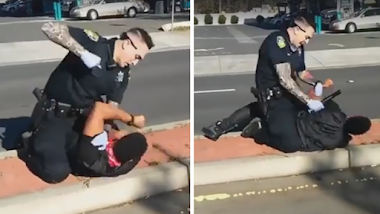
Police brutality can be a dangerous position to be in because you never know what the police might do to you when you get stopped by a cop. In order for you to not get brutalized by the police you just have to listen to the cops and not get in trouble by the police.

The Definition of Civic Engagement

Civic Engagement is when people come together with somebody else's idea that want to help find a solution to try to end a problem that is happening.

Definition of Police Brutality

Police Brutality is the excessive and warranted use of force by law enforcement. Police brutality can also be the cops forcing somebody to do something that they don't want to do. For example, on the website amnesty.org they state that "police brutality is unlawful use of force by police which can end in death,injury,and devastation."  This can be emotional for people to see because cops can be racist for targeting people with a light or dark skin color. 


                                                        Ways to end Police Brutality

Some ways to end police brutality are by speaking/defending others, making a change in the world, and creating celebrity platforms/regular individuals.

There were a lot of people with different that were killed because of police brutality some of the race that were killed due to police brutality were White, Black, Hispanic, other, and unknown.


What people in Los Angeles Think about Police Brutality
Maggie Navarro: "I think that police brutality is violent and should be ended because they are putting people's lives in danger when they get stopped by a cop."


Andrew Gonzalez: "it's wrong, it should be ended by congress and that it needs to stop already before more people get killed by the cops."


References

Schwandt F., Kroger T., Protzmann M., Lowe T., and Jakob H. (2007). People shot to death by the police in the United States from 2017 to 2021.  Published on March 1st 2021 . The people that created that talked about this topic  experts because they did their research based on this. https://www.statista.com/statistics/585152/people-shot-to-death-by-us-police-by-race/

Kall, R (2003). Police Brutality in the United States of America. Article: Police Brutality in the United States of America | OpEdNews

Greenwald,D (2006). City of San Jose Sued for Police Brutality during 2020 Police Brutality Protests. City of San Jose Sued for Police Brutality during 2020 Police Brutality Protests | Davis Vanguard 

Thursday, April 13, 2023

Jonelle Reyes

The Troubles of Housing in Los Angeles 

By Jonelle Reyes 

Los Angeles County, California - Wikipedia

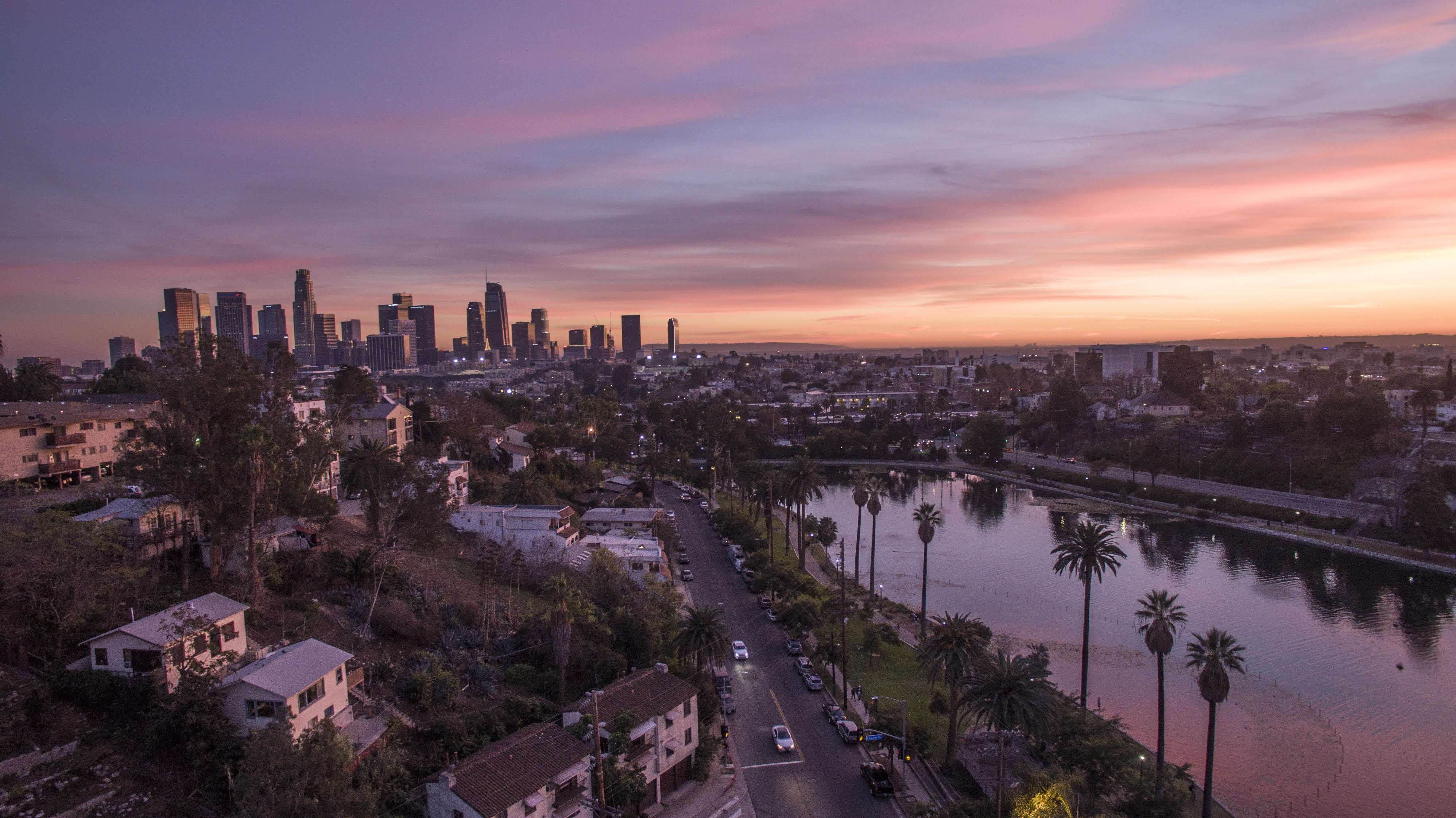
    Nowadays, it's' so hard to find a place to stay and live in La. It's a no-brainer; houses here are just too expensive, they provide little to no variety. How can a 1 bedroom house with 500 square ft be worth $2,000+, and we're talking about just renting. Living in Eagle Rock, I fail to notice really how much the neighboring house next to me really are. Until recently, when my next-door neighbor sold their home for 1 million dollars and it was only 1 bedroom, 1 bath, with 728 sq ft. It is mind-blowing to see such a ridiculous number like that for a house. It's understandable; no one wants to owe any mortgage. But overtime with a valued renter, it will get paid off and you gain a source of income. 

Why finding a home is hard in la?

    It's not a secret to hide. It's due to inflation and gentrification. Inflation is something we can not avoid as our paychecks rise up themselves. However, gentrification plays a significant role in communities, transforming it from “poor” into a considerably “wealthier” area. Then the area's economic value slowly increases, and more affluent crowds begin to see the neighborhood’s attractiveness. Eventually, businesses that cater to middle- and upper-class markets begin to rise in the area, pushing small businesses away. With business booming, simultaneous applying for jobs become harder as well. 

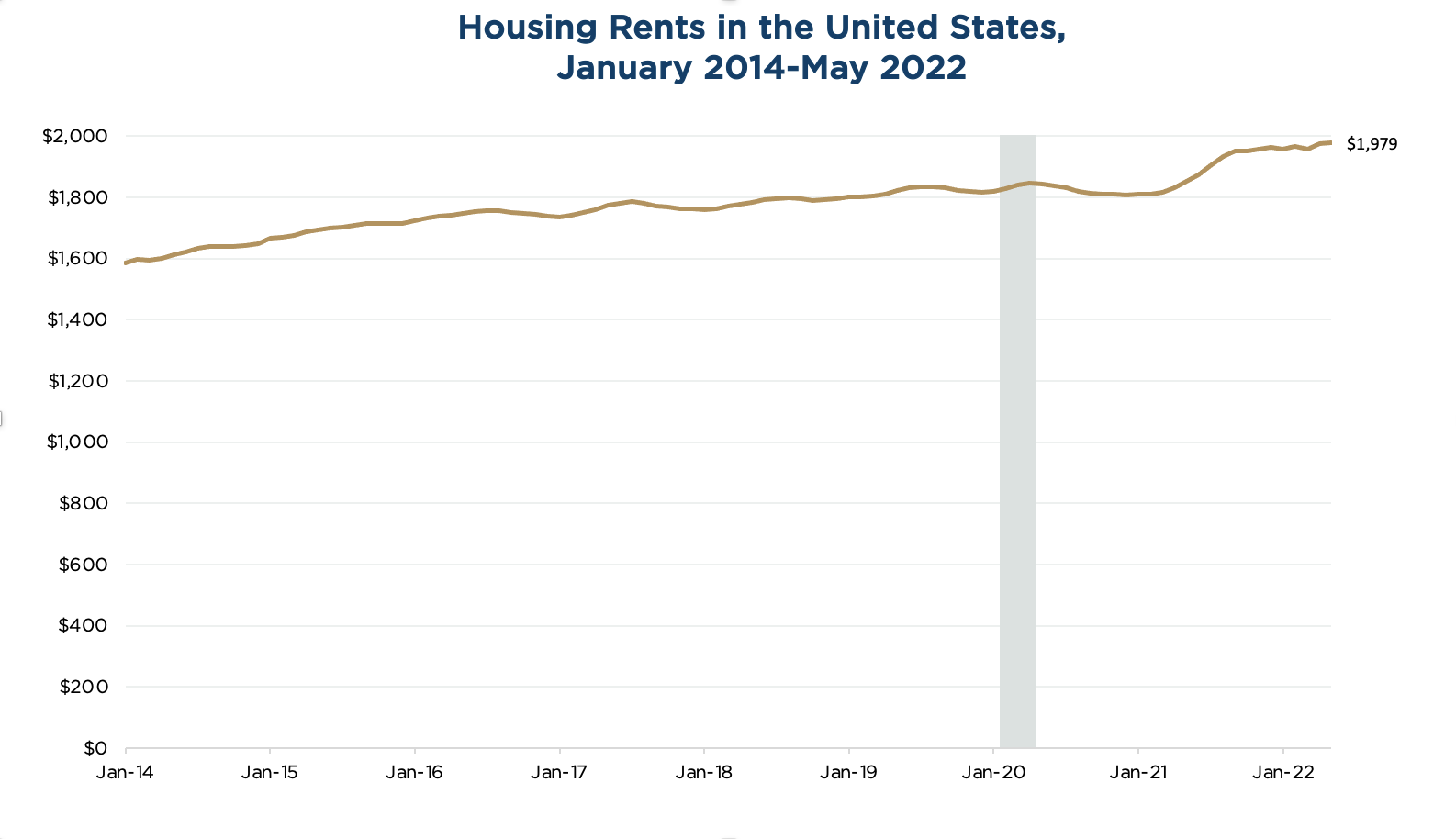
    Doing further research on rent inflation has grown into a concern. Rental prices have increased substantially, especially in the past year from 2014-2022. It started at $1600 and raise to about $2000 at an exponential rate, rising at $100 each year or more; that's a 15.9% increase rate( Hall, 2022). With rent rising, it makes it hard to stay stable. Other payments such as food, insurance, etc, play a role in affordability. We all live on a budget it is not like money comes out of nowhere, nor is it free. 

Chart showing how housing rents in the United States have risen every year between January 2014 and May 2022

The impact of high rents

    Inflation also limits households’ buying power as prices have been rising faster than income. The U.S. Bureau of Labor Statistics reported that average hourly earnings actually decreased by 3 percent over the year when adjusted for inflation. Combined with the nationwide lack of affordable housing, households are struggling to keep up with the rent.

    Older adults particularly feel this pressure. A combination of fixed incomes, climbing rents, and higher prices have caused an increased risk of homelessness among this population. Some patronize food banks or skip meals just so that more of their Social Security income can go towards rent, while many providers report increases in the number of seniors they are serving.

Another factor

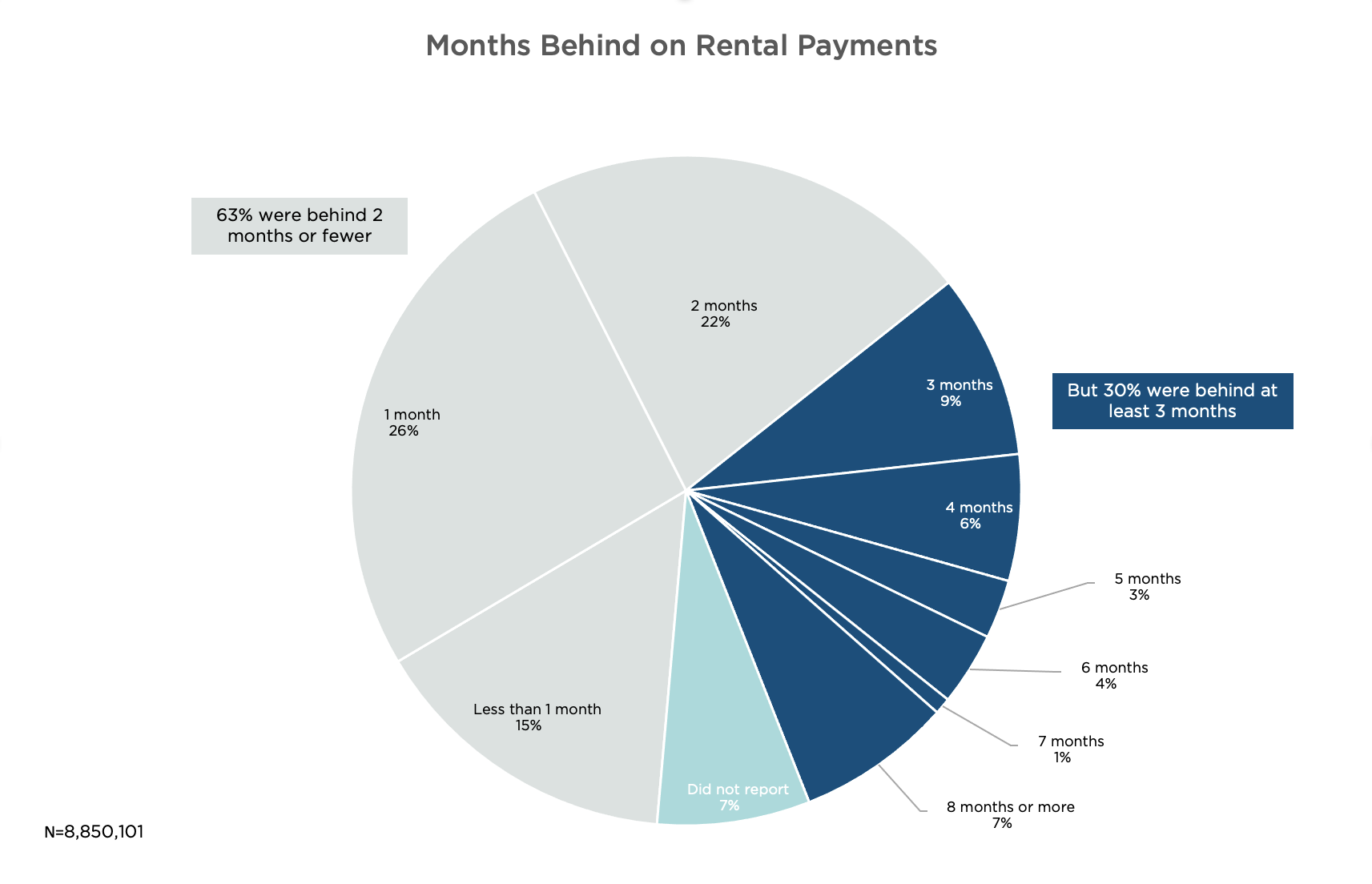
    Just recently, things have been slowly becoming normal from the Covid-19 pandemic. The recovery process from this year has slowly shown progress as we are more free to do activities, the mask requirement is less strict, and not everything is enclosed. But within that year, a lot of people loss their jobs or worked less due to the virus. Which then leads to lower income and not being able to pay rent. The COVID-19 pandemic has been impacting people’s lives in the United States, 8.8 million people were behind on their rent payments from April 27–May 9, 2022 ( Hall, 2022).

Chart showing how 63% of individuals were behind 2 months or fewer on rental payments, while 30% were behind at least 3 months

Community Opinions:


Melisa Lopez: Rent in Los Angeles should not be expensive because most residents who live here are low to middle class who cannot afford the high rent. Through the years it started happening which meant restaurants, apartments, food got even more expensive because of all the high class people that moved here. La is known to have lots of tourist for shows, concerts, views,ect. Which just gives home owners the advantage of charging high prices for their homes/apartments. “ 


Rafael Bravo: “Why does rent go up in LA but not wages?”


Albert Mata: As a renter in LA it can be hard maintaining the lifestyle you please while having to pay not just rent but all the utilities that follow. Finding a good deal on pricing is possible but very slim, and in the area of my current location the average one bedroom goes at $1,650+ not including DWP and other utilities. Renters must be aware of the laws and contracts they get into when renting as some landlords like to up the price annually if your aren’t contracted into a lease making it hard as time goes by. This leaves you less play with gas or groceries. 


References

Healy, J. (2022, August 31). How affordable housing units end up in high-profile L.A. Developments - and how to find one. Los Angeles Times. Retrieved March 21, 2023, from https://www.latimes.com/homeless-housing/story/2022-08-31/affordable-housing-units-the-grand-high-profile-developments-and-how-to-find-one 

Lin, Summer. “California Rents Are Spiking - and in Places You Might Not Expect. 'I Was in Shock'.” Los Angeles Times, Los Angeles Times, 15 Aug. 2022, https://www.latimes.com/california/story/2022-08-15/california-rents-spiking-and-not-just-where-youd-expect. 

Hall, Andrew. “Rising Rents and Inflation Are Likely Increasing Low-Income Families' Risk of Homelessness.” National Alliance to End Homelessness, 17 June 2022, https://endhomelessness.org/blog/rising-rents-and-inflation-are-likely-increasing-low-income-families-risk-of-homelessness/. 

Intimate Partner Violence

 Intimate Partner Violence 

By: Jimena Molina 


What is Intimate Partner Violence? 

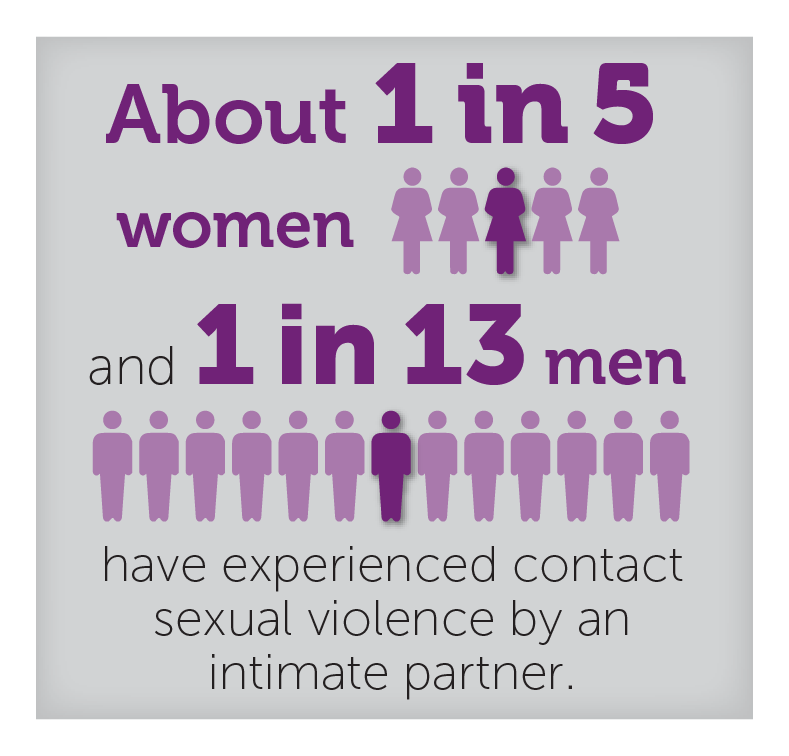
Intimate Partner Violence(IPV): it is abusive behavior and coercive behavior which can result in injuries, it is not always physical violence. There is a misconception that Intimate Partner Violence is just physical abuse like hitting, shoving, slapping, or punching your partner. But there is more to it and this can have long-term effects on the person's partner. IPV can be “psychological abuse, sexual assault, stalking, deprivation, intimidation, and reproductive coercion” (Committee and Health Care for Underserved Women). Intimate Partner Violence involves one of the partners controlling the other and they can be using these types of abuse to control them. It can happen to anyone, males or females, race and ethnicity doesn’t matter. Anyone can be a victim of IPV. 


Types of Abuse

Physical abuse, this abuse involves hitting, beating, slapping, biting, kicking, and threatening with weapons. The perpetrator does this in order to control the victim and in their mindset show them they are the dominant partner. 

Psychological abuse: The perpetrator verbally abuses their partner, degrades them, insults them, threatens them, and isolates them. 

Sexual Abuse: This involves unwanted kissing, touching, or fondling; sexual coercion, and rape. Sexual coercion is a manipulation tactic to get you to agree into having sex. For instance, the perpetrator starts to tell their partner that they don’t love them and they get mad at them making the partner feel bad and give in. 

Reproductive coercion is another type of abuse. This is when the perpetrator sabotages the partner's reproductive health. If you are a woman, the perpetrator can sabotage their birth control pills or maybe poke holes in the condom in order to get her pregnant without her knowing. A woman could do the same or lie about them being on birth control. It is more likely for this type of abuse to happen to a woman. The perpetrator does this to hurt their partner, they can purposely try to give them an STI or STD and then blame the partner for cheating. 


Consequences 

The consequences that come with IPV for victims are: 

Internalizing behaviors

Depression, Suicidal Ideation, Anxiety, Withdrawal, Somatic complaints, poor sleep, school avoidance, eating disorders. 

Externalizing behaviors 

Attention problems, academic underachievement, rule-breaking behaviors, bullying behaviors, substance abuse, and difficulty forming relationships. (Rome, E and Miller, E.) 


Approximately one-quarter of a million hospital visits occur as a result of IPV. One out of ten female high school students in the U.S. have experienced physical violence. Adolescents and young adults have difficulty identifying abusive behaviors. Young women who are victims of reproductive coercion are less likely to identify abusive behaviors such as being pressured into having sex or being threatened.


Fast Facts: Preventing Intimate Partner Violence |Violence  Prevention|Injury Center|CDC

Personal 

This social issue affects me directly because I know people who have suffered from IPV. I am not sure if I have ever suffered from it, although reading these things I can relate to a few and I didn’t know that it was abuse. I thought it was a normal thing and I think that is what happens to a few people. I think that there is a misconception and people only believe that if your partner hits you and beats you that it is IPV. But just like I mentioned earlier there is way more to it. I have noticed that sexual coercion can be used in relationships and the victim thinks it is okay since the perpetrator didn’t force them physically. But it is a type of abuse, if the person truly loved you they would respect you and not try to manipulate you and pressure you into doing something you don’t want to do.  I also wanted to talk about how men can also experience IPV. They chose to silence it because they are embarrassed to say they are being abused by a woman. Men also are abused and society shouldn’t disclude their feelings.


Real-life stories 

Samantha Perez shares a story

.


“I was so afraid, and I felt trapped, he was so nice and sweet at first but as time passed by he seemed to be more aggressive. He started by controlling what I would wear and would call me names when he thought I would dress “provocatively” He will accuse me of cheating and would sometimes threaten me into using physical violence if I didn’t want to give him my phone. He isolated me from my friends because he was jealous of them. He would abuse me psychologically and verbally. He would throw things to make me feel scared.”

CALL THE NATIONAL VIOLENCE HOTLINES IF YOU OR SOMEONE YOU KNOW IS EXPERIENCING IPV

1 (800- 799- 7233)

I would like to share a documentary called "Defending Our Lives" this documentary is about women who suffered from IPV and ended up killing the perpetrator. They all share their stories. https://www.youtube.com/watch?v=KHV0B9OJvkk


Sources 

Committee on Health Care for Underserved Women. “Intimate Partner Violence.” ACOG, https://www.acog.org/clinical/clinical-guidance/committee-opinion/articles/2012/02/intimate-partner-violence#

Rome, Ellen S, and Elizabeth Miller. “Intimate Partner Violence in the Adolescent.” Publications.aap.org, 2020, https://publications.aap.org/pediatricsinreview/article/41/2/73/35370/Intimate-Partner-Violence-in-the-Adolescent


Wednesday, December 7, 2022

Asian Hate in California during Covid-19


        Covid-19 is believed to have emerged in Wuhan, China, in late 2019 and spread globally. As Covid-19 proliferated across the United States of America, the relationship between Asia and America surged due to racial hate crimes involving different kinds of harassment (Gover, Harper & Langton, 2020). 

How has this affected the community in California?

        Throughout the history of pandemic-related issues, the outcome has been associated with some stigmatization. Asia and America, more so the people of California, have experienced verbal and physical violence, which has been happening since the virus began. Covid-19 has increased the level of insecurity in this region, fear of foreigners, and xenophobia, which has led to anti-Asian hate crimes since the start of this pandemic in Asia.

        According to recent research, which was done on the population analysis, it is believed that over six million Asians live in California, making up 15 percent of the residents in the state (Daniels et al., 2021). US Asian veteran indicates scars to call out the act of racism shown to the Asian residents. Anti-Asian violence has been happening in this region, making the stay bad for the Asian community. This incidence is due to the hit of the virus in California people where over 50,000 California people have died due to the virus (Wu, Qian & Wilkes, 2021). These numbers are considered high in orange county, where the number of Asians is over 1200 percent making it the center of hate and extremism (Wang et al., 2021).

        The widespread omission of Asian Americans explains the incidence due to cultural conversation. Some events which are happening in California are not covered in the media. According to the report given by Ms. Nguyen, an activist and the founder of civil rights, some federal agencies don’t include the Asian Americans and pacific islander community when defining matters related to racial minorities (Wu, Qian & Wilkes, 2021). She also says that people who have been attacking Asian American since the time the pandemic started can't show any difference, and they don’t care for anything; she believes that the people in California have made them scapegoat to enact in their violence (Gover, Harper & Langton, 2020). This is believed to be the main issue that leads to hate in this state. 

What the Community Says

When interviewing a member of our community, a few questions about how xenophobia has affected them were asked: 
Q: Have you or someone you know experienced it? How has it affected them?

Yes, my parents experienced xenophobia throughout their life and especially throughout the COVID-19 pandemic. I haven’t experienced this directly, but I have come across microaggressions through nonverbal communication, such as body language and facial expressions. This hasn’t stopped us from going out, but we are more cautious about where we go and who is around us. I now carry pepper spray just in case something happens!

Q: What do you think should be done about this?

I think that more individuals, especially people outside of Asian ethnicity, should be more vocal about debunking the stereotypes and calling out xenophobia when it happens.

Q: Why should young people care about this issue, and what are the most important things we should know about it?

Young people should care because this affects our parents, grandparents, and other older relatives. There have been many instances of violence towards older Asian individuals, and that could easily be your relative on the news.

Cases of xenophobia against Asians have spiked during the pandemic. Misinformation about Covid sparked a lot of hate towards the Asian community.

Q: What would you say to young people like us who want to make a difference around this problem?

See something, do something! And be vocal about correcting any misinformation you hear.


References

Gover, A. R., Harper, S. B., & Langton, L. (2020). Anti-Asian hate crime during the COVID-19 pandemic: Exploring the reproduction of inequality. American journal of criminal justice45(4), 647-667.

Wu, C., Qian, Y., & Wilkes, R. (2021). Anti-Asian discrimination and the Asian-white mental health gap during COVID-19. Ethnic and Racial Studies44(5), 819-835.

Wang, D., Gee, G. C., Bahiru, E., Yang, E. H., & Hsu, J. J. (2020). Asian-Americans and Pacific Islanders in COVID-19: emerging disparities amid discrimination. Journal of general internal medicine35(12), 3685-3688.

Daniels, C., DiMaggio, P., Mora, G. C., & Shepherd, H. (2021, December). Has pandemic threat stoked xenophobia? How COVID‐19 influences California voters’ attitudes toward diversity and immigration. In Sociological Forum (Vol. 36, No. 4, pp. 889-915).