Wednesday, January 22, 2020

Women's Abortion & Health Rights
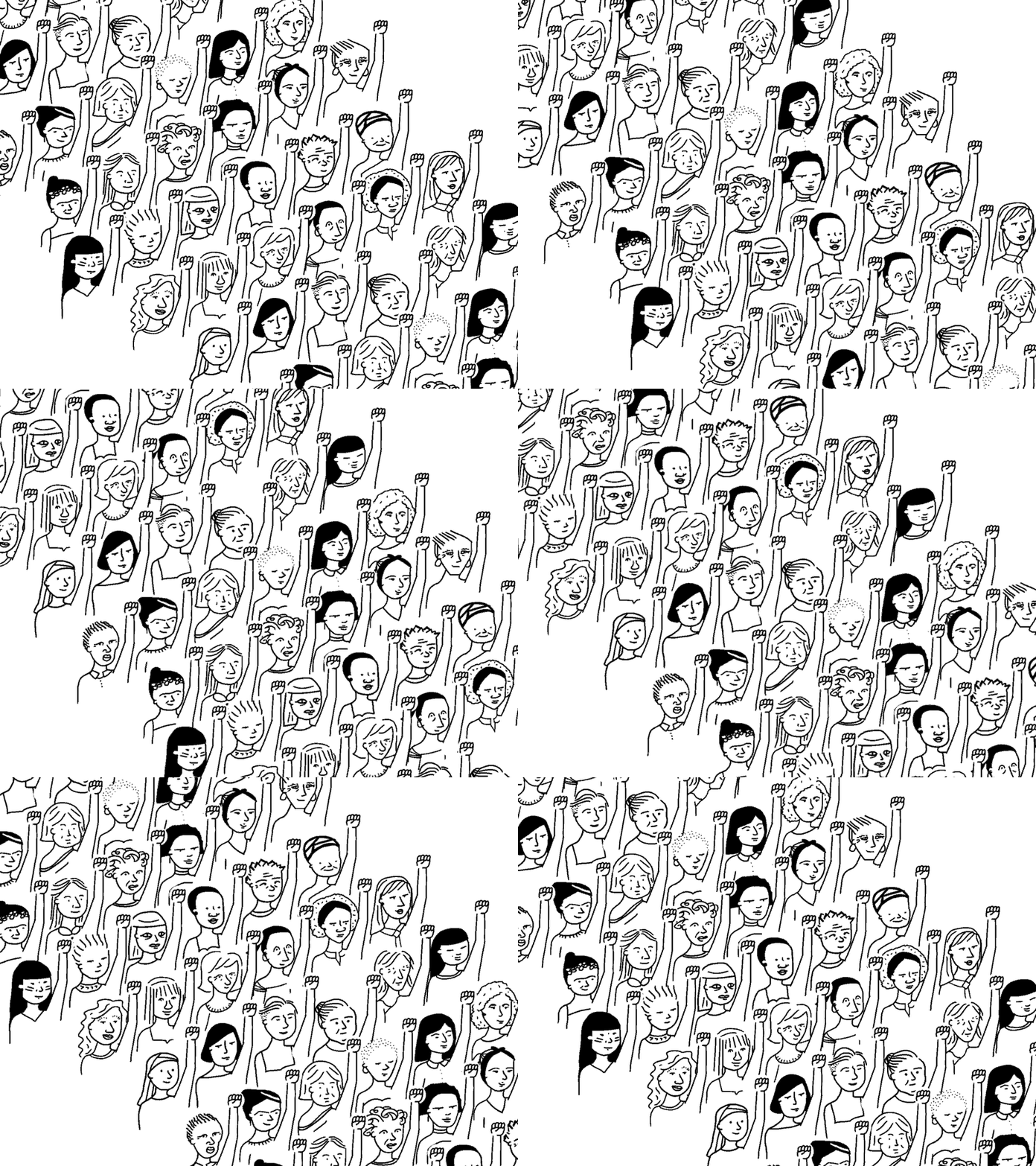
Women's Abortion & Health Rights 

The battle for Women's abortion and health rights has been a struggle since the early 1800s. For many years women have been fighting to claim ownership of their bodies and have safe and easy access to medical care and abortion clinics. This is a social issue that affects all women and it affects me in particular because as a young woman, I would like to have the freedom to do anything that I want with my body and receive no backlash and negative consequences from it. Many types of social change has been accomplished in the past, but women's health and reproductive rights is one of those things that is moving backwards. I chose this issue because as a woman I feel a sense of responsibility to participate in trying to make change in any way that I am able to. I have a platform, and a voice to speak on this issue and I want to do it for those that do not have these opportunities.

History:
Before Roe v. Wade, there were about 1.2 million illegal abortions per year. As a result of this, many women were harmed and even died as a result from these illegal abortions due to the inexperience from the person performing them. The more privileged women were able to have abortions from private doctors but even this was still a risk and this trend quickly declined because doctors would face criminal charges and judgement from their peers. It wasn't until the year 1973 when the Supreme Court came in favor of Roe v. Wade, resulting in the practice of safe and legal abortions. The National Abortion Federation explains where the name Roe v. Wade came from, they described it as, "Jane Roe, a 21-year-old pregnant woman, represented all women who wanted abortions but could not get them legally and safely. Henry Wade was the Texas Attorney General who defended the law that made abortions illegal." 


  • After Roe v. Wade, many "pro-life" people have been finding ways in which to overturn a women's right to have an abortion. This battle is still going on today and we are losing. CBS news states that Louisiana could become the first state to not have legal abortion access since it was made legal in 1973. This is big news and a major setback for Women's Reproductive Rights. 

In addition to this, Elle magazine also explains how the Trump administration changed the Title X family planning program, making it even harder for women to access birth control along with other medical services that are essential to their health and wellbeing.

Statistics:
According to CNN, six states today have only one abortion clinic, and those states include: Kentucky, Mississippi, Missouri, North Dakota, South Dakota and West Virginia. This number is also most likely going to rise as well.


CNN also explains how the number of abortion clinics continues to decline. They explain; "In 1996, the country had 452 abortion clinics, according to Guttmacher. In 2005, that number had dwindled to 381. Any by 2014, the latest year of available data, the number was down to 272." This shows that the numbers are drastically decreasing and will continue to decrease at a rapid pace.

Community Members:
Nereyda Vega, 19
"Being a young woman in America to me, meant that I grew up to realize that we do not have much of a voice when it comes to our rights being discussed at a higher political level. In the process of growing more into a woman I started to see less representation fighting for our basic health rights and necessities. It is 2019 and the discussion of whether women should have the choice to control their own body is still being questioned. It is being questioned by men in government and state mayors who have no idea what it means to experience menstrual cycles, have ovaries and the weight of all that comes along with it firsthand. I want to live in a country where men are not dictating what to do with my body. I want to live in a country that represents women, a country that supports our women. We deserve to feel safe when it comes to our reproductive choices and health, not scrutinized and put in a position of fear. Ultimately we can reach and stay consistent on the topic of women’s health care rights when the proper people are leading our country. Until then as a whole I know my women will shine as bright as we can, to be seen and be as loud as we can to be heard."


Johanna Coreas, 39
"I feel that only women should be able to write up policies involving women's health and/or abortion, and only women should be able to vote on such policies. I respect a male doctors' opinion and advice because they are professionally trained, however I put more value on a female doctors' opinion and advice because they can relate and empathize. They know first hand the essence of a woman. If I ever needed to make a choice between having or keeping a baby, I hope that I can make that choice without judgment from ANYBODY!!" 


  • I chose to interview these two women because they are completely different in age, yet they share similar ideas. This helps to emphasize the fact that the battle for women's health & abortion rights affects ALL women regardless of their age. 


Call To Action: 
With all of the decreasing numbers and setbacks that have been happening lately in regards to abortion access, there is still a chance to make change. Ways in which you can help is by: donating funds to abortion centers

If you cannot donate:

  • Attend local protests
  • Volunteer as an escort (Click here for more info.)


And the most important way to help make change...

  • By electing and voting for progressive, pro-choice candidates. 


We are still a democracy so let's take advantage of this opportunity and make change for a better society.
References: 
https://prochoice.org/education-and-advocacy/about-abortion/history-of-abortion/


Black and white images are from https://giphy.com 


Thursday, November 21, 2019

Gentrification

Gentrification
Gentrification is the process of repairing and rebuilding homes and businesses in a deteriorating area, such as an urban neighborhood accompanied by an influx of middle-class or affluent people and that often results in the displacement of earlier, usually poorer residents. Dramatic changes are playing out across parts of urban America, making many neighborhoods hardly recognizable from a relatively short time ago. A new class of more affluent residents is moving into once underinvested and predominately-poor communities. Development has followed, typically accompanied by sharp increases in housing prices that can displace a neighborhood’s longtime residents. It’s a scenario known as gentrification, and one that presents a growing dilemma for policymakers.


Statistics

• According to citylab.com, on an article called, The Neighborhood That Went to War Against Gentrifiers states, “As cities nationwide struggle with issues of affordable housing, new development, and displacement, disputes over the effects of gentrification are common. What’s different about the battle in Boyle Heights is the protesters’ tactics.”
• Gentrification remains rare nationally. It did, however, greatly accelerate in many cities over the past decade. The following table summarizes the extent to

According to governing.com, the reason as to why this census is scripted as such is because, “These lower-income Census tracts experienced significant growth in both home values and educational attainment. To be eligible to gentrify, a tract's median household income and median home value needed to fall within the bottom 40th percentile of all tracts within a metro area at the beginning of the decade. Tracts considered to have gentrified recorded increases in the top third percentile for both inflation-adjusted median home values and percentage of adults with bachelors’ degrees.”
My Opinion

• I believe it has become a serious issue, especially here in the East Los Angeles area. Today, of about 100,000 residents, more than 90 percent are Latino. About one-third live in poverty, and about 17 percent are estimated to be undocumented immigrants. The community has one of the highest population densities in the city of Los Angeles and in Los Angeles County. Now, home prices in Boyle Heights are surging. This has delighted some families, who are eager to cash in and move away. Others in the area, which has a high proportion of renters, are wary. It has just become so serious that so people can’t even afford to live in a house that they’ve been living for years!

Stephanie Jacobo:(What do you notice everyday?)
  “I see this happening everyday, but what I have also noticed is that the art community has a lot to do with what’s going on in the city that I currently live in. Lots of “white hipters” are coming over to this ethnically populated area and are attempting it make it there own. However, I am not saying these individuals are not welcomed, in fact they are more than welcome, but the fact that they think they can change the culture surrounding this city is what is not okay.”

I see this happening everyday, but what I have also noticed is that the art community has a lot to do with what’s going on in the city that I currently live in. Lots of “white hipters” are coming over to this ethnically populated area and are attempting it make it there own. However, I am not saying these individuals are not welcomed, in fact they are more than welcome, but the fact that they think they can change the culture surrounding this city is what is not okay.”

Carlos Contreras:(What have you noticed in your community?) ” You have white guys telling a brown guy from the projects what to do in the community he grew up in, its just not right man. This is what causes everything to become weird. Tension is everywhere now and it was caused by this issue unfortunately. And it’s only getting worse with time.”

Samantha Claro: (Are art galleries leaving the Boyle Heights area due to gentrification? What does this mean?)
“I've said this before, but the land Boyle Heights is on makes it too desirable to remain a working-class, immigrant neighborhood. Its proximity to Downtown and transit mean it's going to be gentrified whether they keep out art galleries or not.”


Resources:
https://www.governing.com/gov-data/los-angeles-gentrification-maps-demographic-data.html

https://www.citylab.com/equity/2017/03/the-neighborhood-that-went-to-war-against-gentrifiers/518181/


Wednesday, November 20, 2019

Sasha Binder: Vacation in the United States


    Works Cited
1.    Achor, S., & Gielan, M. (2016). The Data-Driven Case for Vacation. Stress. Harvard Business Review. Retrieved from https://hbr.org/2016/07/the-data-driven-case-for-vacation
2.     Guzman, Z. (2018, Aug 15). This chart shows how far behind America is in paid time off compared to the rest of the world. Careers. Retrieved from https://www.cnbc.com/2018/08/15/statista-how-far-behind-us-is-in-paid-time-off-compared-to-the-world.html
3.     Landau, E. (2011, May 24). Why your brain needs vacations. Health. http://www.cnn.com/2011/HEALTH/05/24/vacation.mental.benefits
4.     Mejia, Z. (2018, Aug 30). New research finds taking a vacation could help you live longer. CNBC. Retrieved from https://www.cnbc.com/2018/08/30/new-study-finds-taking-your-vacation-could-help-you-live-longer.html
5.     Mindful Staff. (2011, May 24). Why Vacations Are Necessary. Mindful. Healthy Mind, Health Life. Retrieved from https://www.mindful.org/why-vacations-are-necessary/
6.     Pawlowski, A. (2011, May 23). Why is America the ‘no-vacation nation’? CNN. Retrieved from http://www.cnn.com/2011/TRAVEL/05/23/vacation.in.america/index.html
7.     “Road Trip! Health Net Points Out the Health Benefits of Vacations.” Health Benefits of Vacations. Retrieved from https://www.healthnet.com/portal/home/content/iwc/home/articles/health_benefits_of_vacations.action
8.     Torberg, S. (2017). Importance of taking vacation. THRIVE. Retrieved from https://www.allinahealth.org/healthysetgo/thrive/importance-of-taking-vacation?id=36507232167

Disclaimer: The images and clip art are not own my be. Usage of these images are for educational purposes only. All rights belong to the original artists and sources.
If you are interested in my survey you can still participate and see other peoples responses. Be a part of the discussion! https://forms.gle/uFtuDWEtdqXQ8NBK8 

Friday, November 15, 2019

Edwin


Police vs Us
Research
Police brutality has occurred for so long in the United States. Its occurrence ranges from as late as the 19th century to the 20th century. Police brutality is the illegal use of force against civilians by any police officer. There are different types of police brutality, it can range from verbal to physical abuse. All races, ages and genders have faced police brutality. This country has had many devastating deaths and injuries because of the conflicts between a civilian and a police officer who used excessive force on them. 


Police Brutality Statistics:
  • On average, a police officer takes the life of a civilian every 7 hours.
  • 1,037 people had lost their lives in 2015 due to police brutality.
  • 61% of police officers stated that they do not always report serious abuse that has been directly observed by fellow officers.
  • 84% of police officers have stated that they have seen police officers use more force than required on a person.
Cases:
  • On July 17, 2014 a black man named Eric Garner passed away on Staten Island, N.Y after a police officer put him in an illegal choke hold while being on the ground. Since then, no police officer has been charged with the murder of Eric Garder since then.


  • On July 6,2016, African-American Philando Castile was pulled over at 9:00p.m  by police officer Jeromino Yanez. When the officer pulled over to greet Philando, Philando stated that he had a weapon in the vehicle and that it was all legal. At the time of the stop, Philando Castile was with his girlfriend and her four-year-old daughter. When Philando let the officer know that he had a weapon in the car the officer told him to not reach when Philando stated that he wasn’t reaching for the gun but for his wallet. That is when the officer Jeronimo Yanez shot Philando Castile 7 times and killed him. 

Personal Impact:
Living in East Los Angeles, there has always been a strong surveillance in the area. With strong servalenace there has been a lot of times where I would see police officers harassing people who looked to be affiliated with gangs. I have seen young teens who are stopped and slammed to the ground with no resistance coming from their end just because of the area they are in and because of how they are dressed. It is a sad thing to see that as children grow up in the community they tend to be afraid of the police because of the abuse that police officers do.  


Resources:
Chief, Editor in. “42 Shocking Police Brutality Statistics.” Vittana.org, https://vittana.org/42-shocking-police-brutality-statistics.
Gross, Terry. “'I Can't Breathe' Examines Modern Policing And The Life And Death Of Eric Garner.” NPR, NPR, 23 Oct. 2017, https://www.npr.org/2017/10/23/559498678/i-can-t-breathe-explores-life-and-death-at-the-hands-of-police.
Moore, Leonard. “Police Brutality in the United States.” Encyclopædia Britannica, Encyclopædia Britannica, Inc., https://www.britannica.com/topic/Police-Brutality-in-the-United-States-2064580.
“Shooting of Philando Castile.” Wikipedia, Wikimedia Foundation, 23 Oct. 2019, https://en.wikipedia.org/wiki/Shooting_of_Philando_Castile.

Thursday, November 14, 2019

Dann Francisco - The Decline of Volunteers within United States of America

Dann Francisco

More Volunteers are in Need

Research
        The Bureau of Labor of Statistics creates a report on the Volunteer rates in the United States of America.
        This Report indicates that within the past decade there has been a decline of the amount of Volunteers that participate in Non-Profit Organization within the United Sates of America. It reveals that within the past decade there have been a slow decrease in the percentage of volunteers volunteering within the states. The report tells us the total percentage of the country's population that volunteered within the past years, as well as, informs us of the percentages of age ranges and races that have volunteered from September 2014 to September 2015.
          The percentages of volunteers within the country have declined from 25.3 percent to 24.9 percent. About 62.6 million people had volunteered at least once between the year of September 2014 to September 2015 through or for an organization. This table below indicates and reveals that there has been a continuous decrease of the amount of volunteers throughout the documented list. The table separates percentage of population that volunteered into various variables such as different age groups to ethnicity to their current status in education and employment. 


Table A. Volunteers by selected characteristics, September 2013 through September 2015
(Numbers in thousands)
1 Data refer to persons 25 years and over. 2 Includes persons with a high school diploma or equivalent. 3 Includes persons with bachelor's, master's, professional, and doctoral degrees. 4 Usually work 35 hours or more a week at all jobs. 5 Usually work less than 35 hours a week at all jobs. NOTE: Estimates for the above race groups (White, Black or African American, and Asian) do not sum to totals because data are not presented for all races. Persons whose ethnicity is identified as Hispanic or Latino may be of any race. Updated population controls are introduced annually with the release of January data. Data on volunteers relate to persons who performed unpaid volunteer activities for an organization at any point in the year ending in September. See the Technical Note for further information.

Why are they decreasing?
For what reason are the amount of Volunteers decreasing and why? According to Amy Yotopoulos there are three likely common reasons that caused the decrease of Volunteers. One of which is that people believe that there isn't enough time or that volunteer schedules are not that flexible. She believes that there could be two possible solutions to these which are to find the "sweet spot" of when people volunteer before or/and after they have retired from working. Another solution was to make the opportunities of volunteering more accessible and automatic for people to have access to them such as offering volunteer opportunities for non-working parents who bring their children to school. The second reason or excuse is that people themselves either don't have enough information and that most volunteer roles are not interesting. She explains that most people are likely to volunteer by personal gratification and having a meaningful experience. The solution for this matter was that organizations who utilize volunteers must appropriately request and apply people who have the appropriate skills to the type of work they need their volunteers to do. The third reason she discovered was that some people believe that they need to be asked of to volunteer, that others must ask them to volunteer. Yotopoulos found research that organizations with more successful at acquiring and keeping volunteers have a full-time paid volunteer coordinator. This person invites people to be a volunteer and watches over them throughout the whole process and checks on them at a later date.


       Interviews:
Anthony Sanchez
Retention rate for volunteers has been dwindling for many reasons. Poor management and organization of volunteers causing them to have a poor or negative experience. Lack of proper training or job details can also lead volunteers feeling confused and unable to help attendees properly and feel counterproductive.

Ken Shockley
I think volunteering has decreased over time for a few reasons. The first reason is that people have a bad experience and bad word of mouth spreads more than positive word of mouth. The second reason is that more and more people don't have the time to volunteer and feel they have "more important" things to do instead of volunteering for free.
Oanh Shockley
I use to volunteer for so many organizations, but through time I have other priorities such as work and family.
Also, I am so exhausted to go out and volunteer. I still love the organizations but I don't have the energy to help out.

My Thoughts
         I personally believe that part of the cause that decreases the percentage of volunteers is unfortunately the fault of our advanced technology. We have begun to take advantage of our use of technology and often abuse that ability, such as being distracted by various devices, and/or using that technology to research or learn about volunteer opportunities and take the opinions or experiences of previous volunteers instead of experiencing it for themselves. The issue with this is ones experience with a situation can be a completely different experience for yourself, as well as, their situation maybe have been at an effect of other social matters that might not have been a direct cause or effect of anything related to the volunteer organization that one participated at, such as the passing of a family while in the middle of volunteering for an organization that hosts an event over a span of a few days. Their experience would be less ideal compared to a person who currently having a normal life situation. In a sense people now essentially just look instantly at bad reviews about volunteering experience reviews and tend to overlook the good reviews that sometimes tend to have more or less than the other, but still will deter ones interest in one way or the other from volunteering for said organization. Part of the solution is that people need to start looking outside the box and look at both sides of the story. As well as organizations adjusting to the social norms of this new technologically advanced era, to where volunteers would become more satisfied or feel rewarded for participating in their events. With out these volunteers certain events would not have been possible and be where they are currently. 

Bowles, Annette, et al. “The U.S. Volunteer Rate Is Still Dropping. Why?” Engaging Volunteers, https://blogs.volunteermatch.org/engagingvolunteers/2016/03/25/the-u-s-volunteer-rate-is-still-dropping-why/.
“Volunteering in the United States News Release.” U.S. Bureau of Labor Statistics, U.S. Bureau of Labor Statistics, 25 Feb. 2016, https://www.bls.gov/news.release/volun.htm.
Yotopoulos, Amy. “THREE REASONS WHY PEOPLE DON’T VOLUNTEER, AND WHAT CAN BE DONE ABOUT IT.” Longevity.stanford.edu, http://longevity.stanford.edu/three-reasons-why-people-dont-volunteer-and-what-can-be-done-about-it/.

Works Cited
Bowles, Annette, et al. “The U.S. Volunteer Rate Is Still Dropping. Why?” Engaging Volunteers,                     https://blogs.volunteermatch.org/engagingvolunteers/2016/03/25/the-u-s- volunteer-rate-is- still-dropping-why/.

“Volunteering in the United States News Release.” U.S. Bureau of Labor Statistics, U.S. Bureau of Labor Statistics, 25 Feb. 2016, https://www.bls.gov/news.release/volun.htm.

Yotopoulos, Amy. “Three Reasons Why People Don't Volunteer, and What Can be Done About It.” Longevity.stanford.edu, http://longevity.stanford.edu/three-reasons-why-people-dont-volunteer-and-what-can-be-done-about-it/.

The Ideal Body Image

The Ideal Body Image 


Living in a first world country such as the United States has many benefits: wealth, health, and guaranteed education all being part of them. However living in a heavily Eurocentric based society creates problems for people as well. Body image being one of them. As a society, there are rules in which you can only fit into two genders, as well as act, and look in a certain manner. This creates unrealistic standards that others based themselves on. Always questioning the characteristics of the body they were born into, and how it can be changed in order to fit into the majority's ideal body type. 


WHAT IS CIVIC ENGAGEMENT?

  • Allison Hendricks defines civic engagement in the article “What is civic engagement? Definitions, examples, how tos, and more,” as an engagement that focuses on participation in political activities, community activities or both.
  • In the article “Civic Engagement: Why Cultural Institutions Must Lead the Way” Deborah Cullinan says “At its essence, democracy in the United States is a system of government rooted in a belief in liberty and justice for all. This system depends on the consent and participation of the people. It depends on citizen engagement.
  • My definition of Civic Engagement is being involved in the community in order to create a change for the better, or at the very least start a conversation towards change. For this class I believe it would be defined as using public art in order to use it as a tool for social impact.

Findings


In "THE THINNER THE BETTER? COMPETITIVENESS, DEPRESSION AND BODY IMAGE AMONG COLLEGE STUDENT WOMEN," Lauren Sides-Moore concluded "the negative self-talk and cognitive distortions associated with depression increase body image dissatisfaction and the likelihood of disordered eating and maladaptive thoughts about weight and body shape." This shows how being unsatisfied with your appearance affects other aspects of one's life, something not a lot of people consider. People judge others initially by their appearance, then by their personality. That is why appearance is important to people, whether it is for a romantic relationships or job offers, appearance is the first thing you are judged by, preventing those who have a different body type or appearance from easily attaining a job. However by getting rid of associations between appearance and titles we can work on making a more diverse accepting society.


Based on research conducted by Subhashini Ganesan, she has found that "Among the 1220 students who participated in the current study, 791 (64.8%) of them had undertaken at least one weight control measure in the past 1 year. Of which 157 (19.8%) were satisfied and 634 (80.2%) were dissatisfied with their body image.This study also showed that 64.8% of the college students had undertaken at least one weight control measure in the past 1 year. It also showed that girls who were dissatisfied with their appearance tend to do more weight control measures and the most common weight control measures were eating small meals, skipping meals, and avoiding certain foods. It also showed that the majority of students have cited improving the appearance and to look better in clothes as main reasons for going in for weight control measures. This was also found similar to other studies which showed that appearance was a major motivation for dieting practices."

In order to fall into these ideals, we go to extremes to do so. As long as our society continues to show diversity through the screens, we will be able to see there are other people who look similar to us.  From childhood to adulthood we are guided through advertisements and films on how to look, and act. Advertisements such as Project Body Hair by Billie shows a diverse cast who represents not only different ethnicities but different body shapes as well.


OUR EXPERIENCES AND THOUGHTS


Viviana Bautista
As a shorter, not skinny, brown skinned girl, I've
found myself  lost in thought for hours trying to
come up with ways to, in a way, fit into the
Eurocentric ideal for beauty. Whether it was
through buying products for skin correction, or
falling into negative eating habits. Growing up I
never felt beautiful in my city, it was prominently
a Caucasian neighborhood. However moving to
LA has exposed me to communities who are
more like me and I’ve learned to cherish that. I
find myself following pages with people who look
similar to me, or who don’t fit into the norms,
as a reminder that people with different characteristics
are out there the media is the one who prevents us from seeing them


Kari Flores
I was at my worst around three years ago.
Growing up I never had to deal with acne. I think
after moving out of my parents for college, it
put my through a lot of stress, so my face started
to break out. I would try creams promoted to clear it, but it just wouldn't go away. My self positivity differs day to day. On some days I feel very confident, whereas on other days I don’t want to leave home. I feel like Instagram has had a huge impact on my self-consciousness, everyone looks so perfect in their photos, but when I take some, I find myself being more critical. As bad as it may sound my standard of beauty is still skinny and clear skin, but only to me, those are my own goals. 


Kassandra Navarette
Due to society’s ideal image of what someone should
 look like, I feel overweight. I remember at the age of 
15 feeling ashamed of my body. Victoria secret 
models are skinny and perfect in my eyes, so it made
 me insecure to compare myself to them. However I
 do think we are all beautiful in our own way based
 on our personality.


\


Leslie Ramirez 

In this day and age, I feel like people are heavily criticized based on their looks. You would thing
our generation would be more aware of things
such as appearances. I believe everyone is
beautiful in their own way. I remember being
super self-conscious around the age of thirteen,
ever since I’ve been working hard on accepting
my body for what it is.


Abraham Albiso
Today’s society bases beauty off of mainly the body structure of a person. To fit into the body structure of an ideal man, I would have to be tall, skinny and strong. I personally don’t fit into the ideal characteristics. That bothered me growing up, but I’ve changed my view ever since. I think as I grew older I found that no matter what you look like, beauty and attraction do not always correlate.


Citations:


Ganesan, S., Ravishankar, S. L., & Ramalingam, S. (2018). Are Body Image Issues Affecting Our Adolescents? A Cross-sectional Study among College Going Adolescent Girls. Indian Journal of Community Medicine, 43, S42–S46. https://doi.org/10.4103/ijcm.IJCM_62_18


SIDES-MOORE, L., & TOCHKOV, K. (2011). The Thinner the Better? Competitiveness, Depression and Body Image among College Student Women. College Student Journal, 45(2), 439–448. Retrieved from http://search.ebscohost.com/login.aspx?direct=true&db=a9h&AN=61863673&site=ehost-live