Tuesday, November 5, 2019

Vyvy Pham

The Dark Side of Los Angeles City

"Poverty and homelessness are endless issues in the community, the most serious social issues we need to care more about. This is the other side of a rich Los Angeles city. As everyone knows, Los Angeles is a sumptuous, gorgeous and rich city. We also know it as a paradise and home of superstars and those who have a lot of money. Behind those flashy luxurious images are something totally opposite; poverty and homelessness. The rate of poverty and homelessness are rising every year. This becomes a concern for me. There are thousand unfortunate people are struggling with their life. A small action cannot fix the problem but it helps improve a person's life."
- Vyvy Pham -


Welfare Info revealed many facts about poverty in Los Angeles, California this year 2019.

  • The poverty rate in Los Angeles is 20.4%. One out of every 4.9 residents of Los Angeles lives in poverty.

  • 790,320 of 3,881,668 Los Angeles residents reported income levels below the poverty line in the last year.
  • The Poverty Rate across the state of California is 15.1%, meaning Los Angeles has a significantly higher than average percentage of residents below the poverty line when compared to the rest of California.
  • Foreign-born residents of Los Angeles, California have a higher poverty rate than those who were born US citizens.
  • Of the 2,409,248 residents of Los Angeles, California who were born citizens of the United States, 472,968 (19.6%) had income levels below the poverty line within the past year.
  • Conversely, 317,352 (21.6%) of 1,472,420 residents of Los Angeles, California who were born citizens of a country other than the US reported income levels below the poverty line within the past year.
  • Female residents of Los Angeles, California are moderately(16%) more likely to live in poverty than males.
  • The Poverty Rate for men who live in Los Angeles, California is 18.8% - 360,560 of 1,917,837 males in Los Angeles live below the poverty line.
  • The Poverty Rate for women who live in Los Angeles, California is 21.9% - 429,760 of 1,963,831 females in Los Angeles live below the poverty line.

Breakdown of Los Angeles, California Poverty Rate By Age

Age

Poverty Rate

Children Under 6
29.5% 
Children 6 to 11 Years Old
30.2% 
Adolescents 12 to 17 Years Old
28.8% 
Adults 18 to 59 Years Old
18.4% 
Adults 60 to 74 Years Old
15.1% 
75 to 84 Years Old
17.7% 
Over 85 Years Old
17.3%


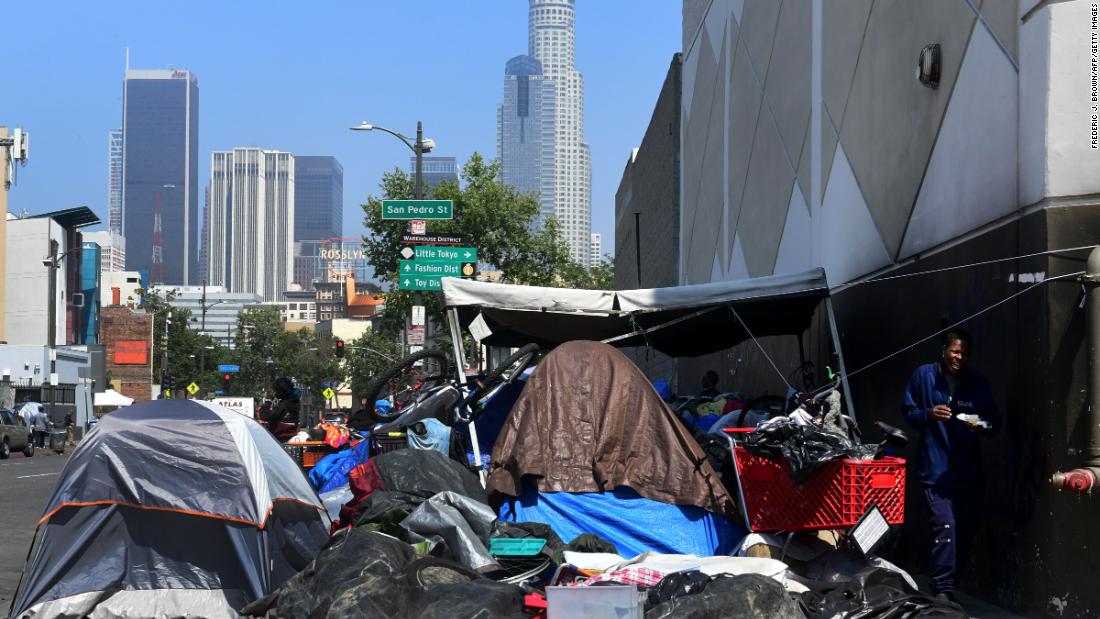
In 2018, California had the highest rate of poverty and homelessness. Due to the house rental increasing every month in LA area, a lot of people could not afford and ended up living on the streets. According to Maeve Reston, CNN National Political Reporter, nearly 60,000 homeless people are living tents on the streets this year. 
See the source image
(Photo and caption from CNN) Los Angeles -- where the bulk of the county's homeless population resides -- saw a 16% rise in homelessness.

In Maeve Reston's article of "Los Angeles' homeless crisis: too many tents, too few beds", she stated 

  • The homelessness crisis gripping Los Angeles is one that has been many years in the making with no easy fix. It is a problem driven by an array of complex factors, including rising rents, a staggering shortage of affordable housing units, resistance to new shelters and housing developments in suburban neighborhoods, and, above all, the lack of a cohesive safety net for thousands of people struggling with mental health problems, addiction and, in some cases, recent exits from the criminal justice system that have left them with no other options beyond living on the streets. 
  • The new homeless count released Tuesday by the Los Angeles Homeless Services Authority showed nearly 59,000 people living in the streets across Los Angeles County, a 12% increase over the prior year; and 36,300 homeless people within the city limits of LA, a 16% increase over last year's count. 
  • The number of people living without shelter still went up 12% in the county and 16% in the city. Homelessness among youth and children rose 24% over the previous year, according to the 2019 Greater Los Angeles Homeless Count Results.
  • The rise in homelessness in neighboring counties was equally bracing. Homelessness was up 43% in Orange County over the previous year, 28% in Ventura County and 50% in Kern County.


What do people in our community think about poverty and homelessness issues?

First interviewee 
Yelee Shin, a volunteer at St. Francis Center in LA. 
I met Yelee for the first time at St. Francis Center when we both volunteered here. St. Francis Center is where provides homeless people food, shower and giving free groceries to low-income families in LA. Yelee has been volunteering here for a while to help serve homeless people breakfast, lunch and preparing pantry for low-income families. Therefore, I really wanted to hear what she thought about homelessness and poverty in our community. Yelee is a shy girl, she did not want to show her full face but she agreed to participate in this project by giving me permission to take a side photo of her while she giving out groceries to people. 
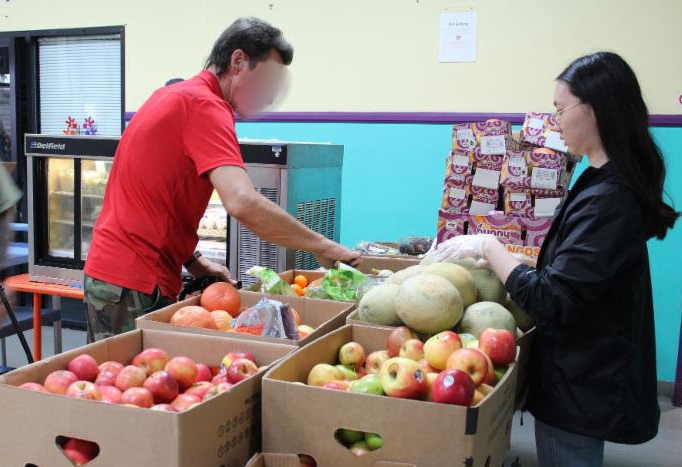


" I think homelessness and the issue of poverty is a huge deal in Los Angeles — especially in Skid Row. Every time I pass by Skid Row, I see rows of tents filled with homeless people. In addition, this street is littered with trash and the stench is quite awful. Everything about this street screams “poor living conditions”. Whenever I’m around this area, I always feel a surge of emotions and have no choice but to be reminded by the grim reality of homelessness in the city of Los Angeles. I am affected by the issue of homelessness. My neighborhood isn’t that great and whenever I go outside of my house — even if it’s just a 3-minute walk, I see tents everywhere and people sleeping on the ground. Also, the scent of urine and trash is quite prevalent in my area. I participate in Vyvy's action project, calling for change by posting my image publicly. I believe that we should definitely do something in order to alleviate the issue of homelessness. I think that one of the reasons why homelessness is so prevalent in our city is because many of these people have untreated mental health and substance abuse issues. We need to increase mental health support. If quality treatment was available to everyone, there would be a decrease in homelessness. Additionally, it would be helpful if the city and county found new approaches in sheltering homeless people." 
- Yelee Shin -


Second interviewee 
Joahanna Luna, a friend of mine in Art 3110-Social Engagement class and a volunteer at St. Francis Center in LA. 


"Poverty and homelessness is a serious issue and everyone should be aware and get involved in helping the community. Things that should be done about this offer more resources to the homeless community and to the families who are facing poverty. City officials need to be more involved and invested in this situation and they need to find the root causes for the people in this situation. Once that is established they would be able to better help these people. I think homelessness in our community is a huge issue because it just keeps on growing. Poverty is also a huge issue in LA because the rent just keeps on getting higher and higher and then some jobs just refuse to give raises to people. The cost of living is just getting really expensive. Homelessness somehow affects me, it makes me think about what can be done to help this community. In some ways, it does make me sad to think there are also homeless kids and families. One way that I like to give back to the homeless in our community is by volunteering at shelters that provide breakfast and lunch to the homeless community. Another way I like to participate is by making holiday bags that include everyday necessities like shampoo, toothpaste, toothbrush, feminine products, a few snacks, and warm socks, to name a few, to keep them warm during the holidays." 
- Joahanna Luna -

Fourth interviewee
Daisy Santos, a Cal State LA student. She used to live in LA before but now she is doing a fashion internship at a fashion showroom in LA. 


"I believe homelessness and poverty is an issue in our community, especially in Los Angeles. 
I think I am affected by this issue but also everyone should be affected by it as well. By even just knowing about issues like these it should have some sort of effect as we can not ignore it from being a reality in communities. Seeing people who struggle in these issues is not something that can be easily forgotten. I also believe people should help one another, and bring awareness to those who might not know too much about these issues in communities. Even when you think one person can’t make a change that is completely false because it is better than having zero involved. As an individual who has witnessed these issues by just driving around Downtown Los Angeles it gives me a wake-up call on how I can contribute more in the community to make even a small difference. By seeing these issues in person it makes me start thinking how I can set time aside to." 
- Daisy Santos -

Why I chose this issue?
As a part of this community, one out of over 4 million people who are living in Los Angeles community, I need to bring this social issue up to call for help. Poverty/homelessness issue became a big concern and it really mattered to me when I started volunteering at St. Francs Center, where I helped serving breakfast, preparing lunch and giving out groceries to low-income families. I felt related to those who I met here. It is so heartbreaking to see people living under poor conditions, lacking everything, unemployed, and the most miserable image I have ever seen was the homeless elders with disabilities. At an old age, they still struggle with life alone, instead of enjoying a happy life,  having a good time with their children and grandchildren. 
This is me preapring breakfast for homeless people at St. Francis Center


This volunteering experience made me think of my past, especially the time when my family just moved to the US and tried so hard to start living a new life here. We used to face so many obstacles. My dad was unemployed for two years, at that time, my family was in financial difficulties all the time. We always lived with worries; not having enough money to pay for the rent, utility bills, gasoline, ...  many other worries we needed to take care of. Therefore, I am totally affected by this issue even though I did not suffer as much as people out there in LA do.  I realize that I am still very lucky compared to those who are living on the streets in LA. I want to share the difficulties with them by doing something for this community. Whenever I have time, I would register to volunteer, sometimes, I  donate money as much as I can to homeless people I see on the streets. Their smiles, their happiness make my day. There would be no forever solution to fix this social issue but there are so many small actions we can take to make a change. Volunteering/community service is one of the helpful actions or donating things to people who really want them; such as canned food, unwanted clothes, furniture or anything that you think people really need for their daily life.


Cited Works
Reston, Maeve. (June 18, 2019). Los Angeles' homeless crisis: too many tents, too few beds. Retrieved from https://www.cnn.com/2019/06/18/politics/los-angeles-homeless-crisis/index.html

Holcombe, Madeline. (June 5, 2019). Homelessness has gotten worse in LA County despite huge investment. Some other cities see a decrease. Retrieved from https://edition.cnn.com/2019/06/05/us/homelessness-los-angeles-2019/index.html

Poverty in Los Angeles, California. (2019). Retrieved from https://www.welfareinfo.org/poverty-rate/california/los-angeles.

Breast Cancer- Sheila Valencia Ochoa

Breast Cancer 


What is Breast Cancer?

Breast cancer is a disease in which cells in the breast grow out of control. Breast cancer can begin begin in any area of the breast. There are three main parts which are the Lobules, Ducts, and Connective tissue. Breast cancer can occur in women and rarely in men as well. 

Symptoms:
  • New lumps in the breast or underarm (armpit)
  • Thickening or swelling in parts of the breast
  • Irritation or dimpling of breast skin
  • Redness or flaky skin in the nipple area or breast
  • Pain in the nipple area or any area in breast
  • Nipple discharge ( Milk, Blood) 
  • Change in size or shape of breast 
Risk Factors:                                              
  • Getting old 
  • Genetic mutation                                          
  • Reproductive history 
  • Having dense breast 
  • Previous treatment with radiation 
  • Changeable Risk Factors 
  • Not being physically active
  • Being overweight or obese after menopause 
Statistics:
  • 1 in 8 U.S. women will develop invasive breast cancer over the course of her life.
  •  An estimate of 268,600 new cases of  invasive breast cancer are expected to be diagnosed in women in 2019 and 62,930 new cases of non invasive breast cancer.
  • About 41,760 women in the U.S. are expected to die in 2019 from breast cancer.
  • Breast cancer death rates are higher in the U.S then those of any other cancer. 
  • As of January 2019, there are more than 3.1 million women with a history of breast cancer. This includes women being treated or have been treated 
Personal Experience:

About 3 months ago my family and I had the worst news every that my mom, my best friend, the person I can rely on for anything was diagnosed with a mass in one of her breast and they were not sure what it was. Of course my mother panicked and thought of the worse the doctor sent her to get another exam to conclude what the mass was. Thankfully it was not anything to do with breast cancer but that does not mean she is risk free. From now on she is going to be monitored every year to make sure the mass does not have an association with cancer. This diagnosis got my family and I thinking of the worse such as the cost of treatment to help get medical care for my mother incase she was diagnosed with breast cancer. I am thankful my mother is cancer free and it was nothing to worry about but we can never be to precautiones about such situations. 

Interviews:
Noemi Jacobo

" I think there should be less women associated with breast cancer. We need to find a way to treat women and men with breast cancer at lower costs or at least provide them with accessible health care so they can be treated and we reduce the amount of deaths associated with breast cancer around the world not only in the U.S. but in other nations too."

              
                        Ildegarda Valencia 

" El cancer es muy triste para las personas que le detectan el cancer de ceno porque es muy difícil de combatir cuando lo diagnostican en una de las etapas avanzadas. Los tratamientos usados para combatir el cancer de ceno son muy fuertes que ay veces que muchas de las mujeres pierden un pecho y es muy triste porque callen en la depresión por la misma razón que su cuerpo no es el mismo."


                                                 Luis Martinez 
" Even though I am not a women but as the youngest brother who has two sisters and a mother I feel related to this issue because anyone can be affected by this issue since there isn't an exact cure to fight this disease.  I believe there should be more studies being conducted to the different stages of breast cancer so that men and women can get the right medication or treatment needed to fight such a killing disease to the ones we love. As a nation we should be able to provide accessible health care for people going through a diagnosis like this one which is hard to deal with in a personal level but also as a financial level it becomes a big pain that not everyone can afford which can lead to more deaths when we can help prevent them."

Call to action:

After reading about such disease I came to realize that a lot fo the deaths due to breast cancer are due to it being diagnosed in late stages due to women not having regular check ups called mammograms. During the month of October many local clinics provide free or low cost check ups but not everyone knows about such events. Therefore, we could all work together or team up with the city and provide information flier to everyone or at community meetings just so people are informed of such events and the word gets spread. That's the best we can do to helping with having accessible health care and providing information about the topic so women and men are aware of such disease. An important thing to remember is that your not alone no matter what you are going through there is always someone else going through the same process don't give up keep on pushing through!


References:
Breast Cancer Statistics. (2019, May 28). Retrieved from 
https://www.cdc.gov/cancer/breast/statistics/index.htm.
U.S. Breast Cancer Statistics. (2019, February 13). Retrieved from https://www.breastcancer.org/symptoms/understand_bc/statistics


Monday, November 4, 2019

Fernando Colin

*ART 3170-01 CIVIC ENGAGEMENT PROJECT*


STUDENT MENTAL HEALTH--REACHING OUT

The Problem:

Students are unaware of resources that can help them cope with their mental health issues.

A major social issue that is happening in our community is the lack of attention and support that students are getting when it comes to coping with their mental health issues. Students who are barely having the will power to do their assignments are barely going to have the will power or time to eat, sleep and live a healthy lifestyle. If a student begins to ignore these daily needs it can affect their mental health issues even more. 

Research

  • Some of these conditions commonly occur together, for example:
  • Having another disorder is most common in children with depression: about 3 in 4 children aged 3-17 years with depression also have anxiety (73.8%) and almost 1 in 2 have behavior problems (47.2%).
  • For children aged 3-17 years with anxiety, more than 1 in 3 also have behavior problems (37.9%) and about 1 in 3 also have depression (32.3%).
  • For children aged 3-17 years with behavior problems, more than 1 in 3 also have anxiety (36.6%) and about 1 in 5 also have depression (20.3%).
  • Depression and anxiety have increased over time
  • “Ever having been diagnosed with either anxiety or depression” among children aged 6–17 years increased from 5.4% in 2003 to 8% in 2007 and to 8.4% in 2011–2012. 
  • “Ever having been diagnosed with anxiety” increased from 5.5% in 2007 to 6.4% in 2011–2012. 
  • “Ever having been diagnosed with depression” did not change between 2007 (4.7%) and 2011-2012 (4.9%).
  • Rates of mental disorders change with age
  •   Diagnoses of depression and anxiety are more common with increased age.
  • A recent national study of college students indicated that many students felt overwhelmed with all they have to do, with almost half of students (46.5%) having this feeling at least 7 times a year, and 28.2% having this feeling 11 or more times a year. 
  • Likewise, 32.8% felt exhausted (not from physical activity) 9 or more times in the last year. 
  • Stress also negatively affects students‘ academics; 22.9% of students reported receiving a lower grade on an exam, 6.6% receiving a lower course grade and 1.3% receiving an incomplete or withdrawing from a course because of their stress (ACHA, 2006b). 
  • Similar data from 2003 and 2004 identified stress as the number one health impediment to a students‘ academic performance with 32.0% and 32.4% of students being affected, respectively (ACHA, 2005; ACHA, 2006a). 


Personal Experience
     Through my own experience I've noticed that students become even more independent after high school and that leads to these students being overwhelmed with stress and anxiety. Students attending college are now responsible for: transportation, food, scheduling, sleep and many other responsibilities that life throws at them. All of these responsibilities are thrown at students at various moments in their life and many times these responsibilities are not dealt with correctly which leads to a sense of not knowing what you're doing. Your confidence begins to drop, you stop eating, you stop caring less and sleeping more, or you stop caring less and partying more. All of these decisions lead to an unhealthy lifestyle that ends up affecting you mentally and to make matters worse there is always different life events that can greatly affect a students mental health even more. An example of this would be my own sister. She started forming at a university that's about 2 hours away from home and it was a very big change for her. She has always been a very responsible, mature and independent woman. In high school she was involved in ASB, Varsity Soccer, various clubs, AP classes and she always seemed to handle everything so well and overall she looked happy. But once she moved away to school she became more anxious and worried about everything. I still remember there was this one weekend where my sister came home and I asked her about her classes at dinner and she had to excuse herself to the restroom and she ended up crying in the restroom. Knowing my sister i decided to not immediately ask her why she randomly started crying, but later at night she ended up having an anxiety attack and i had to help her calm down. We did go through a lot of traumatic family experiences at that time but I could definitely see that she has been going through something mentally for a while. Thats when I started realizing that my sister is alone for most of the time when she's at school. She was so used to having food back home and seeing so many different friendly faces but now she's stuck in her dorm or in her class all by herself. Sadly, this is a reality for many students and some just need that extra support that will help them know that everything is going to be fine.

Interviews


ALAN ROJO
"Bro, honestly i believe a lot more students should seek these services. Mental health is a crazy topic because you never know who's going through something bro. It's not easy for some people to talk about their problems or feelings. And its also not easy for them to talk about their issues to people who care about them because they don't want to burden them or have them worry. Its honestly hard af for me to talk about my feelings bro. And honestly im so fucked in the head but honestly can't you tell? Im always happy and cracking jokes bro but like dang. You know, everything going on in my life so you know what I'll be thinking about sometimes so you kind of understand, but not everyone is going to understand or know if something is going on based on actions like mine. Honestly if they talk about their issues they would live a much more relaxed life."


JACKY GONZALEZ
"I believe more students should speak up about their mental health and what they are going through because there could be other students that are going through the same situation. Hearing about another student going through a similar situation could encourage them to either speak to that individual and they can relate to each other and possibly help one another. Or that individual can provide advice, tips, or encourage them to speak to someone."


YESENIA ROJO (no picture provided)
"Students should speak up about their mental health and what they are going through because it gives them an opportunity to share what they are goin through and getting everything off their chest while at the same time relating to others and knowing they are not alone, everyone shares the same struggles."

What now?
     Schools, families and communities need to have more programs that will help students deal with their mental health issues. I believe that to be able to really help these students the community is going to have to find ways to reach out directly to the students that are having the problems. 


Resources

What to Do About Being Overwhelmed: Graduate Students, Stress and University Services
Sara B. Oswalt, Christina C. Riddock* ---->    https://eric.ed.gov/?id=EJ899402

Data and Statistics on Children Mental Health ----> https://www.cdc.gov/childrensmentalhealth/data.html

Female Beauty Standards in America-Jessalina Wong

Female Beauty Standards in America

What's the Issue

When scrolling on social media, what do we see? Cute dogs doing tricks and being happy, shirtless men with six-packs and huge biceps, or women with flat stomach and perfect tans? In the age of social media, we are constantly bombarded with images of people with perfect bodies. We're constantly reminded that we're not beautiful unless we have the perfect hourglass figure. American beauty standards are based on flawless hair, perfectly done makeup, big breasts, the smallest waist, and a big butt. From a young age, we were showed that we can be the perfect woman by the iconic doll, Barbie, but it could only be achieved if we looked like her. So, what's the big issue? The issue with these unattainable standards is that it teaches females at a young age that you're worth in society is measure by your looks. This puts a huge strain many young women and their psyches if they're constantly looked down on for not meeting these beauty standards. It causes a drop in self-esteem and can even cause serious issues like depression, eating disorders, or suicide.

Research 

Facts

  • The main focus of dissatisfaction for most women looking in the mirror is the size and shape of their bodies, particularly their hips, waist, and thighs
  • Beautiful people make about 5% more than their average-looking colleagues
  • People who are unhappy with their bodies and don't seek healthy nutrition information may develop eating disorders. "Eating disorders" are unhealthy relationships with food that may include fasting, constant dieting, or binging and purging
  • Students, especially women, who consume more mainstream media, place a greater importance on sexiness and overall appearance than those who do not consume as much

Statistics


  • In a survey, 81% of ten-year-old girls had already been on a diet at least once
  • During a study conducted by Harvard University, two thirds of underweight 12-year-old girls considered themselves fat
    • By 13, 50% of those girls were significantly unhappy about their appearances
    • By 14, the girls had focused and specific dissatisfaction in their appearances; especially in their hips and thighs
    • By 17, 3 out of 10 of the girls have not been on a diet. 8 out of 10 were unhappy with what they saw in the mirror
  • In some studies, up to 80% of women over-estimated their size
  • 58% of college-aged girls feel pressured to be a certain weight
  • In a survey, more than 40% of women agreed they would consider cosmetic surgery in the future. The statistics remain relatively constant across gender, age, marital status, and race

Personal Experiences

Growing up in an Asian American household, appearances was something that is continuously talked about. When I was younger, I was constantly being looked down on because I was underweight and tanned easily. Even with being underweight, I was constantly being told that I was fat and "too big". As I got older, these beauty standards played a consistent role in my upbringing; when I started college I started getting more interested in sports like powerlifting and bouldering which are sports that caused me to noticeably gain muscle. When I started gaining more weight, whether it be muscle or fat, I would constantly hear from my mom and aunts that I "wouldn't find a boyfriend since I'm too big", "people won't like you since you're big", "you'd be prettier if you were skinnier", "don't get too much muscle it looks too manly", etc. Being bombarded with comments about my weight and size completely destroyed my self-esteem and made it very hard for me to look at myself in the mirror without seeing myself as a fat blob. To this day I still struggle with looking at myself in the mirror when I'm trying on clothes because all I see are all those negative comments that have been so ingrained in my mind. Even with all of those negative comments, I think I'm truly lucky because I have an amazing group of friends and boyfriend that have been slowly helping me relearn my self-worth and give me back my self confidence. 
Interviews

Cindy Su


"The female beauty standard in America is disproportional and is harmful for younger females. The idea is having big breasts and butt while at the same time having a 24 inch waist which isn't possible naturally without the help of plastic surgery. Growing up, I didn't feel like I was too affected by the American beauty standards since I wasn't exposed to it as often as others, but I had my parents continuously reminding me that being beautiful meant you were less than 100 pounds and light skinned. I didn't realize how much this put a strain on myself until I recently visited my parents and was constantly reminded that I'm not as skinny as I was in high school; when I had an eating disorder."

Jessica Oshiro

"I feel like the female beauty standard further enforces patriarchy. There are so many rules for how women should look, but men can just come as they are and be accepted. I experienced having to meet those standards by having to wear dresses and makeup to events that were considered formal even though I dislike both those things. Weight and size are always a topic of conversation that is pushed onto girls. Being a girl with tattoos/piercings is considered being "cool" and "edgy" to a limit until it's considered grotesque. Growing up, the expectations made me really self-conscious. I internalized external opinions. I wasted a lot of money and energy trying to look cool.

Jazmin Marin

"Growing up, I did feel like I had to meet female beauty standards especially seeing all the skinny models on TV. At a certain point I tried to meet those standards and had some success in doing so. However, as I grew up, I started to realize that those standards were BS and learned to accept myself no matter my body type or the way I looked. I do feel that having to meet those standards held me back for a couple of years in trying to define who I was as a female"
Kimberly Bolaoen (no image)

"I think that female beauty standards are unrealistic and it has made some women go to extreme lengths to try to fit that standard; like surgery of face or body, excessive makeup, etc. even when their health is being compromised in the long-term since surgeries can go wrong. I have experienced trying to somehow get as close as I can get to meeting those beauty standards so that I can be 'pretty'  and thinking back on it, it made me feel like I had to change so many things about myself because I thought everything looked 'wrong'; especially when I was younger and didn't really know myself then. I feel like thinking that I HAVE to meet these standards really messed with my head and self-esteem and it took me a while for me to gain back the feelings of being 'worth it' with what I got"

Sarah Herrera (no image)

"I feel female standards are horrible; you're expected to meet these standards in everyday lifestyle. You see beautiful women at every CVS ,or other stores, selling products and vehicles and we are supposed to look a certain way and if you don't you're considered ugly in the eyes of society. I feel, for me, meeting these standards meant having to save up money to get a lip injection, a boob job, or liposuction just to be considered beautiful. I, personally, went through weight loss surgery and I still feel I'm not good enough for society when growing up I looked up to Brittney Spears and JLO. I wanted to to be a size zero and since I never met that expectation I fell into depression; getting mad at my mom for not buying me the latest makeup or clothing and blaming my mom for why I am fat. Now that I'm older I still feel like it plays an important role in my life and I 100% would not have gotten the weight loss surgery if I didn't have to. I did it for my health, but in my head I thought I was gonna be a beautiful woman when in reality I really do need to start loving myself to find beauty."


Call to Action


So after all of this, what can we do to put an end to all the hurt being felt? Sadly, the issue isn't as simple as telling people to ignore beauty standards because it just isn't that easy of a fix. There isn't much that we can do to completely do away with beauty standards that are set within our societies, but there are small changes that we can make to change how we react to these beauty standards. The most important thing that we can do, no matter the gender, is give ourselves self-love and reminding ourselves that our self-worth isn't measure by what we look like. Instead of surrounding ourselves with all these negative feelings, we can choose to uplift ourselves and others around us in order to take the power away from those that tell us that we aren't beautiful because we don't look like the "ideal" woman. Lastly, an important thing to remember is that you're beautiful no matter your size, age, ethnicity, gender. 

References

ASAPS: The American Society for Aesthetic Plastic Surgery (2014), Survey finds that women are more likely to consider plastic surgery than they were ten years ago. Retrieved from http://www.surgery.org/media/news-releases/survey-finds-that-women-are-more-likely-to-consider-plastic-surgery-than-they-were-ten-years-ago
Fox, K. (1997), Mirror mirror. Social Issues Research Centre. Retrieved from
www.sirc.org/publik/mirror.html
Good Therapy. (2014), Eating and food issues. Retrieved from http://www.goodtherapy.org/therapy-for-eating-disorders.html.
National Association of Anorexia Nervosa and Associated Disorders (2015), Eating disorders statistics. ANAD. Retrieve from http://www.anad.org/get-information/about-eating-disorders/eating-disorders-statistics/.
Palmer, Mario (2014). 5 facts about body image." Amplify. Retrieved from http://amplifyyourvoice.org/u/marioapalmer/2013/05/21/byob-be-your-own-beautiful.
Spector, D. (2012). 11 more fascinating facts about beauty. Retrieved from https://www.businessinsider.com/facts-about-beauty-2012-5

Sunday, November 3, 2019

The Asian-American Generation and Tiger Parenting - Joseph Besinga

The Asian-American Generation and Tiger Parenting

Background

For me personally, what I wanted from this post was some form of fulfillment of my own identity of being an Asian-American born from immigrant parents. The large amount of people that I have met during my time at California State University, Los Angeles are also in the same status as myself. 
As I thought to myself, one idea began to stick into my mind when thinking about Asian-American culture, tiger parenting.

I personally have a positive relationship with my parents, but I did face forms of tiger parenting growing up and felt that there were some negative effects that I find myself having. During my time in school and college, I felt forms of inadequacy, high expectations placed upon me, and an almost irrational fear of failure. These negative aspects felt like something that was a direct result of tiger parenting, and I wanted some input from my fellow Asian-Americans who were raised by these tiger parents and how it has impacted them.

Facts and Statistics

These facts are on both the demographics of Cal State LA and about tiger parenting in general.

- The amount of students identified as Asian in Cal State LA as of Fall 2018 is 3,598 students, which makes up of about 13% of the student body.
- Tiger parenting is defined by Amy Chua in her book "Battle Hymn of the Tiger Mother", as the pushing from parents to their children to succeed academically or extracurricularly through high demands and strict enforcement.
- One study by Su Yeong Kim of the American Psychological Association found and diagnosed children of tiger parents to have lower socio-emotional health when compared to children of more "hands off" parents.
- Another study by Su Yeong Kim found that children of tiger parents associate their high performances with large amounts of high distress, causing a form of "paradox" during their upbringing. This has led to some having negative effects on their upbringing.


Personal Experience


Me and my parents during my high school graduation

As mentioned before, my parents have shown tendencies that match under the definition of tiger parenting and how it has negatively impacted me. I feel that there will be punishment for my failures as a student even to this day. Even when I do succeed academically, I can sometimes feel as what I am doing is not enough to satisfy my parents and even feel shame when I think that I do not meet their standards. I wanted to bring this idea into more eyes with this project to show that while there are positive effects of tiger parenting, there are very negative effects as well. Due to the significant amount of Asian-American students here on Cal State LA's campus, they can realize that they were a part of tiger parents, and can analyze themselves to see if their mental state is okay.

Why This Issue is Important

Due to the large amount of Asian-Americans here at Cal State LA, I wanted them to realize that their worth should not be based only on their academic achievement and embrace failure. People should be able to realize that they are affected by these aspects of tiger parenting, and should be able to address it when moving into their own independence.

Community Concerns

I asked some fellow Asian-American students who would claim as being raised by tiger parents the question: "How do you feel tiger parenting has impacted you?"

"To be honest, it is kind of insane when I think about it. I mean, whenever tests pull up, I feel like that I have to do good to ensure that I can succeed. The whole stereotype of Asian parents associating anything lower than an A as a bad grade is a reality for me, since growing up they always told me that I could do better whenever I got anything lower, and it still carries with me to college. It has created a decent work ethic for me, but I sometimes have that lingering thought when attending school."
- Julian S.

"I love my parents and I know that they love me back, but without a doubt it has affected me. Especially during my first year in college when I failed my first class, I was sick to the core. I felt like I could never go home to my parents or let them know about my failures or that I was struggling due to how it was during high school. I did manage to tell them eventually, but that fear did hold me back from doing so."
- Jeff C.

"I hate the idea of tiger parenting and feel like that it is kind of bulls*** (Can I curse on this? -laughs-). I am a large advocate for mental health and I know that this contributed directly to damaging some of my own. I hate the idea of punishing failure, I hate the strictness and punishments for not performing. As soon as I moved for college, it felt liberating to be free from my parents and had to make peace with myself for my upbringing. This should not be an issue for people, especially since it is so much more different in the real world than from under a tiger parent's upbringing."
- Christina J.

Conclusion

What I wanted to show overall with this project is that tiger parenting can lead to some personality traits in Asian-Americans that are negative. While these people can thrive academically and even financially, they would have strong negative associations with their parents, which could be mended if they were to recognize that they were impacted by tiger parenting. I do not want to condemn tiger parenting, as there is still forms of love behind it, but I do want to bring into light negative effects of it and being able to move on from them.

Works Cited


“Cal State LA Quick Facts (Fall 2018).” Cal State LA.
Chua, Amy. Battle Hymn of the Tiger Mother. Bloomsbury Publishing, 2014.
Kim, and Su Yeong. “What Is ‘Tiger’ Parenting? How Does It Affect Children?” Https://Www.apadivisions.org, www.apadivisions.org/division-7/publications/newsletters/developmental/2013/07/tiger-parenting.
Kim, Su Yeong, et al. “Does ‘Tiger Parenting’ Exist? Parenting Profiles of Chinese Americans and Adolescent Developmental Outcomes.” Asian American Journal of Psychology, U.S. National Library of Medicine, 1 Mar. 2013, www.ncbi.nlm.nih.gov/pmc/articles/PMC3641860/.